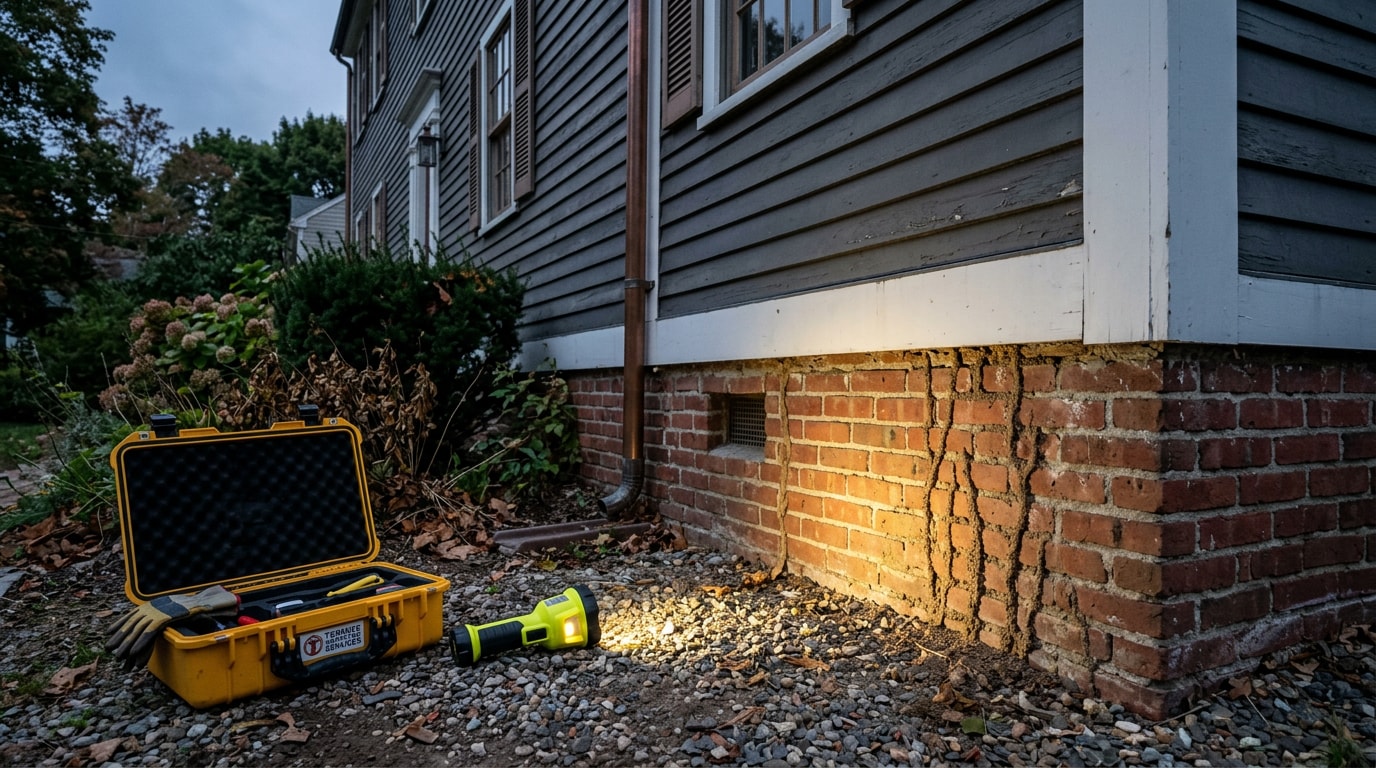
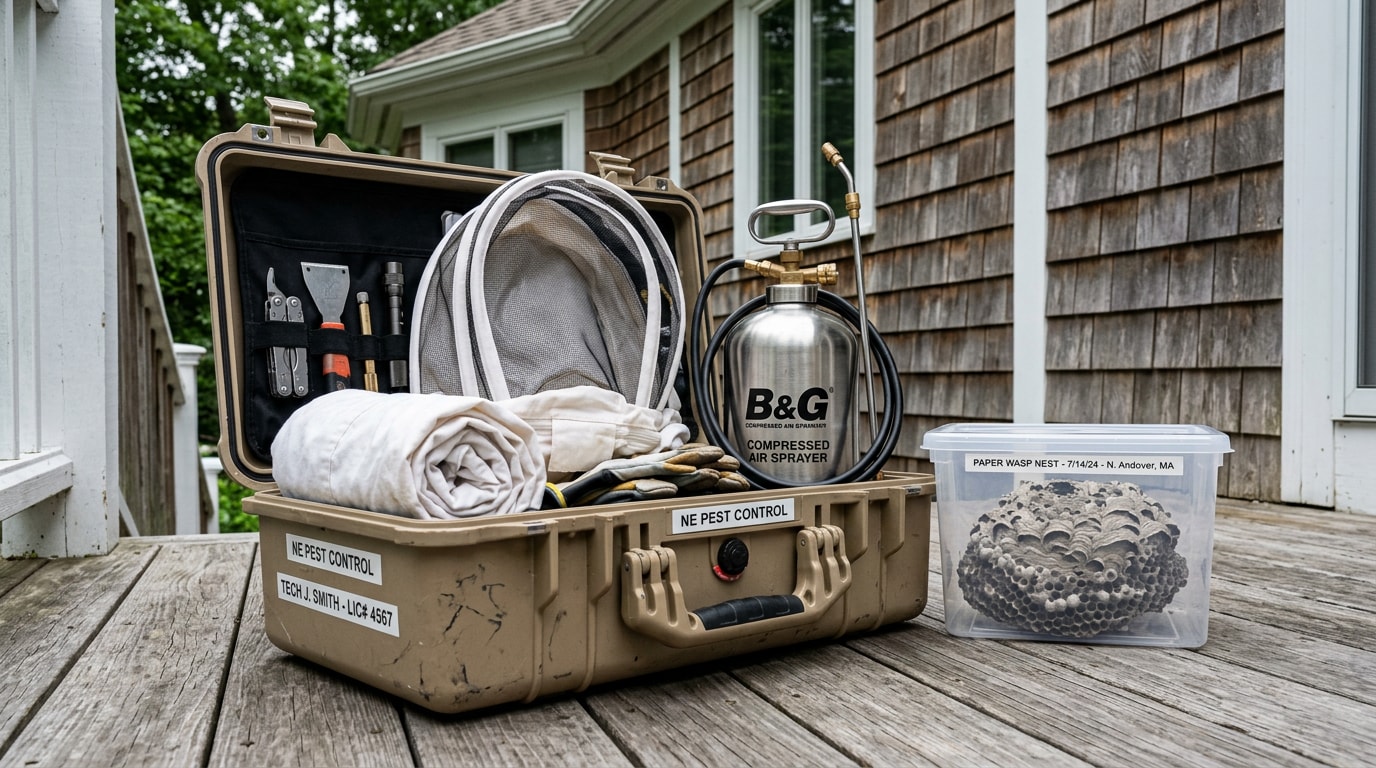
Bee control Quincy homeowners call for usually starts the same way: a nest in the eaves, buzzing inside a wall, or a sting near the deck. This guide walks through what's actually nesting on your property, why DIY removal backfires more often than it helps, and what a professional visit looks like from inspection to final seal. Skip to the free estimate section if you already know you need service.
Bee and Wasp Removal Services in Quincy, MA
Bee control in Quincy covers three jobs: removing an active nest, exterminating wasps or hornets that have moved in, and sealing the entry points so insects don't come back. Nests show up most often around eaves, deck framing, siding gaps, and sheds, anywhere wood or a quiet cavity is easy to reach.
A standard visit typically includes:
- On-site species identification (bee, wasp, or hornet)
- Nest location assessment, including hidden wall and attic voids
- Live removal or extermination based on species and location
- Entry-point sealing to stop repeat nesting
Explore the full range of treatments on our pest control services page, or go straight to bee control service details for Quincy-specific pricing and scheduling.
Why Bees and Wasps Need Professional Removal
A single defensive sting is uncomfortable. A disturbed nest is a different problem entirely, since dozens of insects can respond at once. In our technicians' experience on Quincy properties, ground-level nests near decks and patios are the ones that catch homeowners off guard, because the first sign is often a lawnmower passing too close.
That risk isn't hypothetical. Fatalities from insect stings are often due to anaphylactic shock, and CDC data counted a total of 1,109 US deaths from stinging insects between 2000 and 2017. For anyone with a known allergy, a repeat sting raises the stakes further, since people who have a severe allergic reaction to a sting have a 25-65% chance of anaphylaxis the next time they are stung.
That risk gap, not inconvenience, is the real reason to request professional hornet and wasp extermination instead of a store-bought spray.
Carpenter Bees vs. Bumble Bees: Telling Them Apart
Correct identification changes the treatment plan, so it's worth checking before calling for service.
| Feature | Carpenter Bee | Bumble Bee |
|---|---|---|
| Nest location | Drilled holes in exposed wood, eaves, trim | Ground cavities, old rodent burrows, grass clumps |
| Abdomen | Shiny, mostly hairless | Fuzzy, fully covered in hair |
| Structural risk | Tunnels reused and extended yearly | Minimal to none |
| Typical sting risk | Males are territorial but stingless; females rarely sting | Will sting if nest is disturbed |
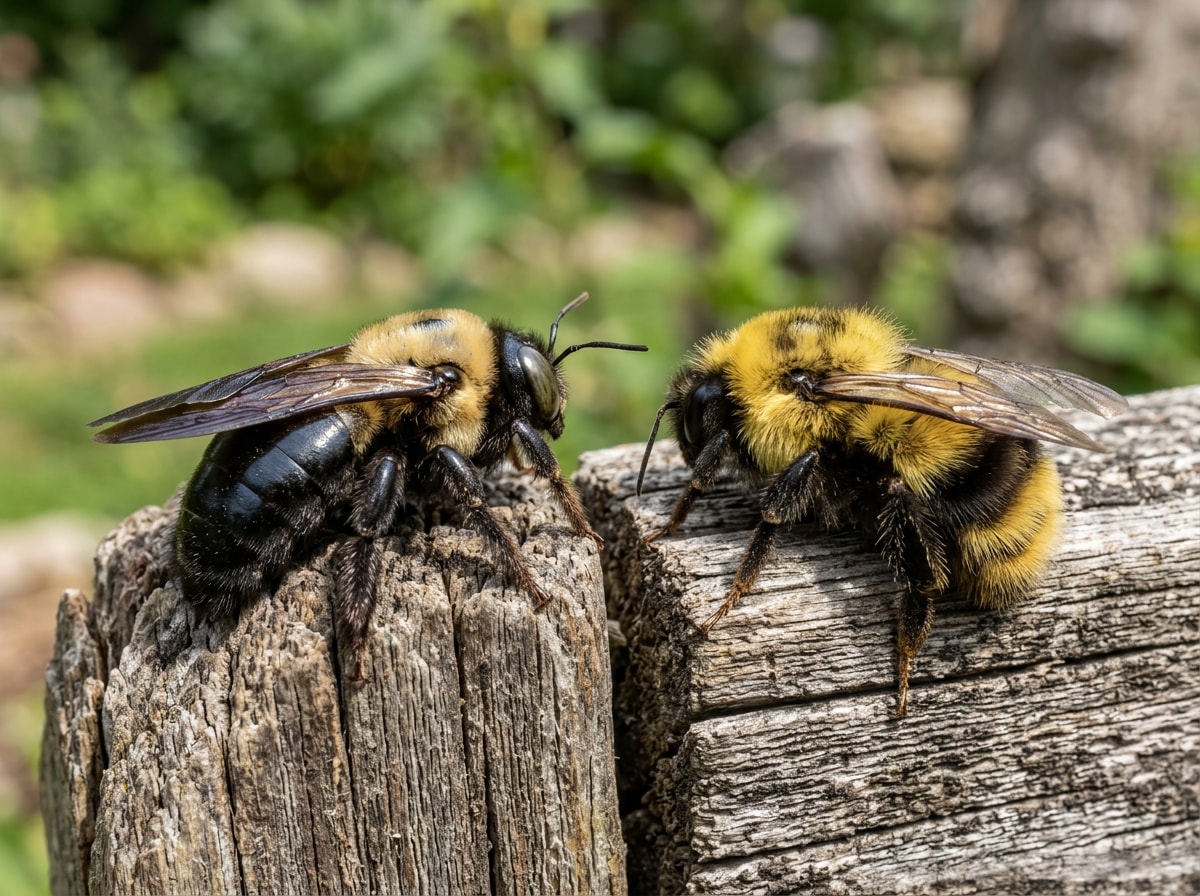
This distinction matters because carpenter bee damage compounds over time. Carpenter bees reuse existing tunnels or build new ones in which to lay their eggs , which is why the same trim board often shows fresh holes every spring if the original tunnel is never treated and sealed.
Yellow Jackets and Other Wasps Common in Quincy
Yellow jackets are the most frequently reported stinging insect on Quincy properties, and they're often the species behind a "bee" complaint that turns out to be something more aggressive. They favor hidden cavities over open structures. Underground nests are often built in holes or burrows abandoned by rodents, and yellow jackets expand the cavity as the colony develops.
That hidden growth is exactly what makes them dangerous to disturb accidentally. Yellow jackets swarm when someone accidentally comes too close to an underground nest, and a dangerous swarm of hundreds can be provoked by ground vibrations like mowing a lawn.
Bald-faced hornets and digger wasps also turn up locally, but far less often than yellow jackets. If you're unsure which category of stinging insect you're seeing, our general pest inspection can confirm it before treatment starts.
Fast Bee Removal Service
Active nests near entryways, play areas, or shared walls don't wait for a convenient appointment slot. Fast bee removal in Quincy usually means same-day or next-day response. Having the nest's general location and whether ladder access is needed ready for the technician speeds up scheduling considerably.
For stinging insects that have moved into a quiet cavity or attic void rather than an exposed nest, pairing removal with exclusion work keeps the same gap from being reused by the next colony.
Get a Free Bee Removal Estimate
A free bee inspection includes species identification, a nest location assessment, and a treatment recommendation before any work begins, with no obligation to proceed. Schedule a free inspection to get a nest assessed before the colony grows any larger. For stinging insect pressure around a larger property or yard, our bee relocation service covers both removal and prevention planning.
Homeowners dealing with a mix of stinging insects and other seasonal pests, like the cicada killers that show up in sandy, sparse-grass yards, can also check our guide on how to get rid of cicada killers) for identification tips that apply across the South Shore. Visit our homepage for the full list of pest and wildlife services covering Quincy and the surrounding area.
FAQ
How much does it usually cost to remove bees?
Cost depends on nest size, location, and species. A ground nest generally costs less than one hidden inside a wall void, since wall nests require more labor to access and seal. Most companies, including ours, quote the removal cost after a free inspection confirms what's actually there.
Do you have to pay to get rid of bees?
The inspection is typically free. Removal itself is a paid service once the species and nest location are confirmed, since pricing depends on access difficulty and treatment method.
How to get rid of bees permanently?
Permanent results require nest removal combined with exclusion work: sealing entry points and treating known nesting areas, not just a one-time spray. Skipping the sealing step is the single most common reason a "resolved" bee problem returns the next season.
What will get rid of carpenter bees?
Carpenter bees return to the same tunnels, so professional treatment paired with sealing and repairing the damaged wood trim is usually necessary. Covering the holes without treating them first rarely solves the problem for long, since bees can chew through a thin patch.
Are yellow jackets more dangerous than bees?
Generally, yes. Yellow jackets are more aggressive when a nest is disturbed, can sting multiple times, and often nest in places people don't expect, like underground cavities or wall voids. That combination makes them responsible for a disproportionate share of sting-related incidents compared to bees.
Can I treat a bee or wasp nest myself?
It's possible for small, exposed nests, but hidden nests in walls, attics, or underground cavities are harder to treat completely and easier to disturb by accident. A missed or partially treated nest often means a second, angrier encounter with the colony.
What's the difference between bee removal and exclusion work?
Removal eliminates the current nest and its occupants. Exclusion work seals the gaps, cracks, and cavities that made the spot attractive in the first place, which is the part that actually prevents round two.
Who Wrote This Guide
This guide was reviewed by the field team at Lighthouse Exterminators, licensed Massachusetts pest control technicians who handle bee, wasp, and hornet calls across Quincy and the South Shore. Have a nest you're not sure how to classify? Contact us with a photo or description and we'll help you figure out what you're dealing with before anyone gets near it.