If you're searching for termite control near me in Medford, MA, you likely already spotted mud tubes on a foundation wall, soft wood near a sill plate, or discarded wings on a windowsill. This guide walks through the species active in Massachusetts, the specific signs tied to each one, and what a professional treatment plan actually involves. By the end, you'll know exactly what to check on your own property before calling for an inspection.
Local Termite Control Service in Medford, MA
We provide termite inspections and treatment directly to Medford homes and extend that same coverage across the surrounding communities, so help is never far away.
Termites don't wait for convenient timing, and neither do we. Whatever your property type, our dispatch routes are built around getting a technician to your door quickly. Check our Medford, MA service area page to confirm coverage for your neighborhood, or browse the full pest control service lineup to see everything we handle beyond termites.
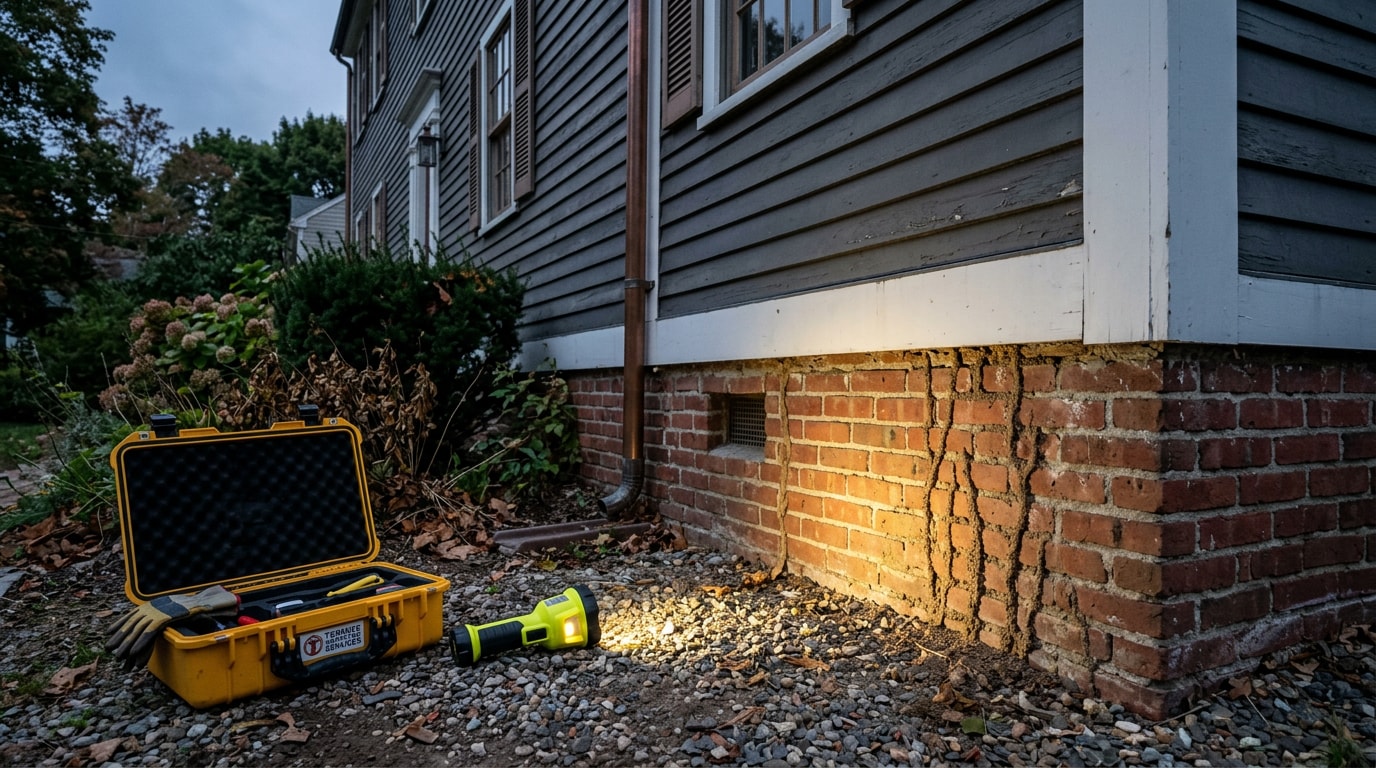
In our inspections across Medford's triple-deckers and post-war capes, mud tubes most often turn up at the back foundation corner near a downspout, not the front porch area homeowners usually check first. That pattern alone is a good reason to have a trained eye look at the whole perimeter, not just the obvious spots.
Signs of a Termite Infestation in Your Medford Home
Termite warning signs vary by species, so matching the clue to the culprit matters before deciding on treatment.
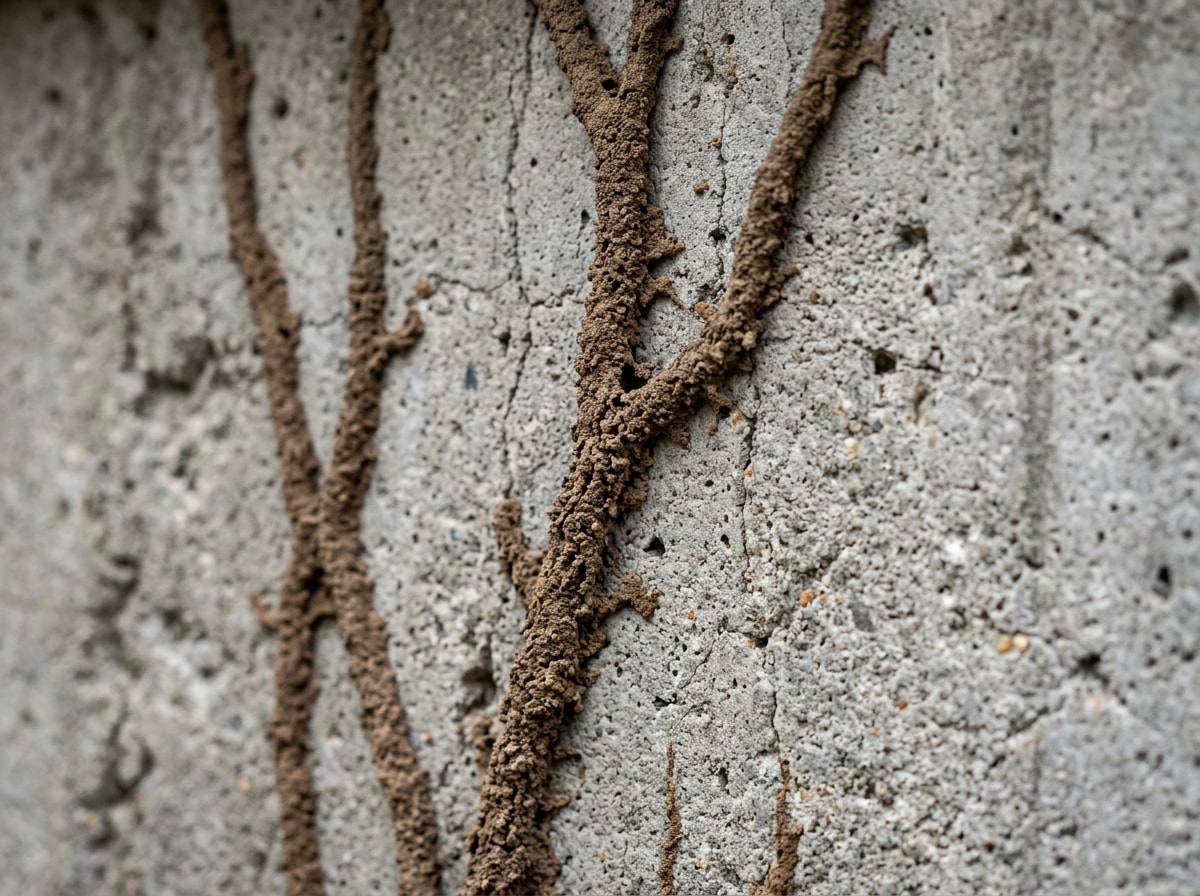
- Subterranean termites leave pencil-thin mud tubes running up foundation walls, piers, or crawl space supports.
- Drywood termites leave small, pellet-shaped frass that collects in tiny piles near the wood they're feeding on.
- Dampwood termites leave wood that looks water-stained, feels soft, or shows small exit holes.
Subterranean Termite Signs
Subterranean termites live underground in large colonies, so the clearest signs show up at the point where they enter a structure. Pencil-thin mud tubes along foundation walls or crawl space supports are the telltale clue that a colony is actively traveling into the home.
Hollow-sounding wood when tapped, and discarded wings near windows or doors after a spring rain, are two more clues worth checking.
Drywood Termite Clues
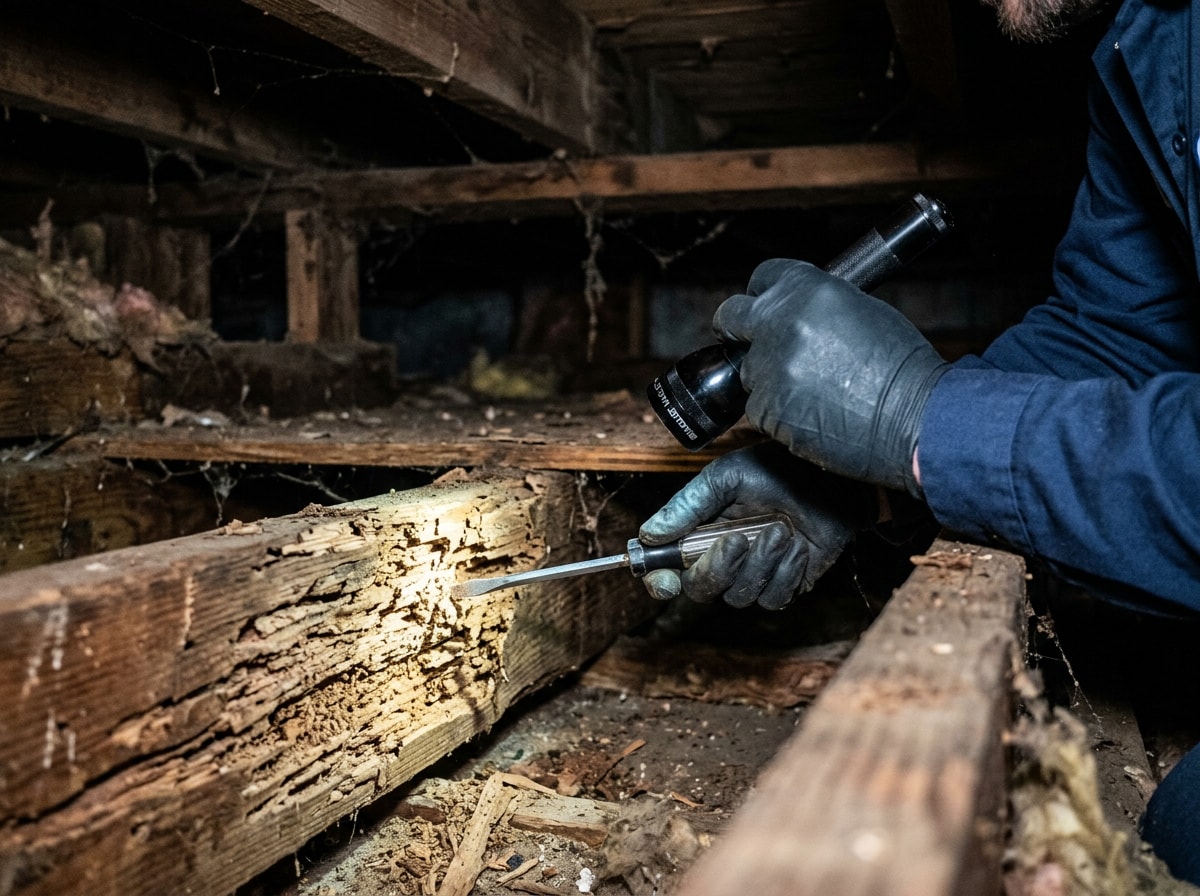
Drywood termites need far less moisture, so their warning signs look different. The giveaway is usually frass: small, pellet-shaped droppings that collect near the wood they've been feeding on, often mistaken at first for sawdust or sand.
Dampwood Termite Trail
Dampwood termites typically infest wood that already carries higher moisture content, such as water-damaged framing, old stumps, or neglected decks. Any wet or rotted wood near the home deserves a closer look for internal tunnels, since that's where this species tends to settle in.
Common Termite Species Found in Massachusetts
Massachusetts homeowners typically deal with three termite species, each with distinct habits and risks.
Eastern Subterranean Termites: The Primary Threat
Eastern subterranean termites (Reticulitermes flavipes) are the most common termite in Massachusetts and are responsible for the majority of structural termite damage reported across the state. They require constant contact with soil moisture to survive, which shapes both their habits and how they're treated.
The most frequently encountered termite species in New England is the Eastern subterranean termite, and the species' reproductive swarms typically appear between March and June , according to a fact sheet published by the Connecticut Agricultural Experiment Station. Spotting a swarm during that window is often the first visible sign of a colony that's already been active for a while.
Drywood Termites: The Occasional Visitor
Drywood termites appear far less often in Massachusetts, but they do occasionally show up, particularly in imported lumber or secondhand furniture brought up from warmer regions. Unlike their subterranean cousins, drywood termites can survive with minimal external moisture, drawing what they need directly from the wood itself. That makes them harder to rule out based on soil conditions alone.
Dampwood Termites: The Moisture Specialists
Dampwood termites favor excessively moist or decaying wood, and their infestations can be harder to detect since they don't create the visible mud tubes subterranean termites leave behind. Because moisture drives this species, prevention centers heavily on fixing leaks, improving drainage, and keeping wood from staying damp for long stretches.
Professional Termite Identification and Treatment Options
Treatment approach depends heavily on which species is involved. The method that works for a subterranean colony won't necessarily work for a drywood or dampwood problem.
| Treatment Method | Best For | How It Works |
|---|---|---|
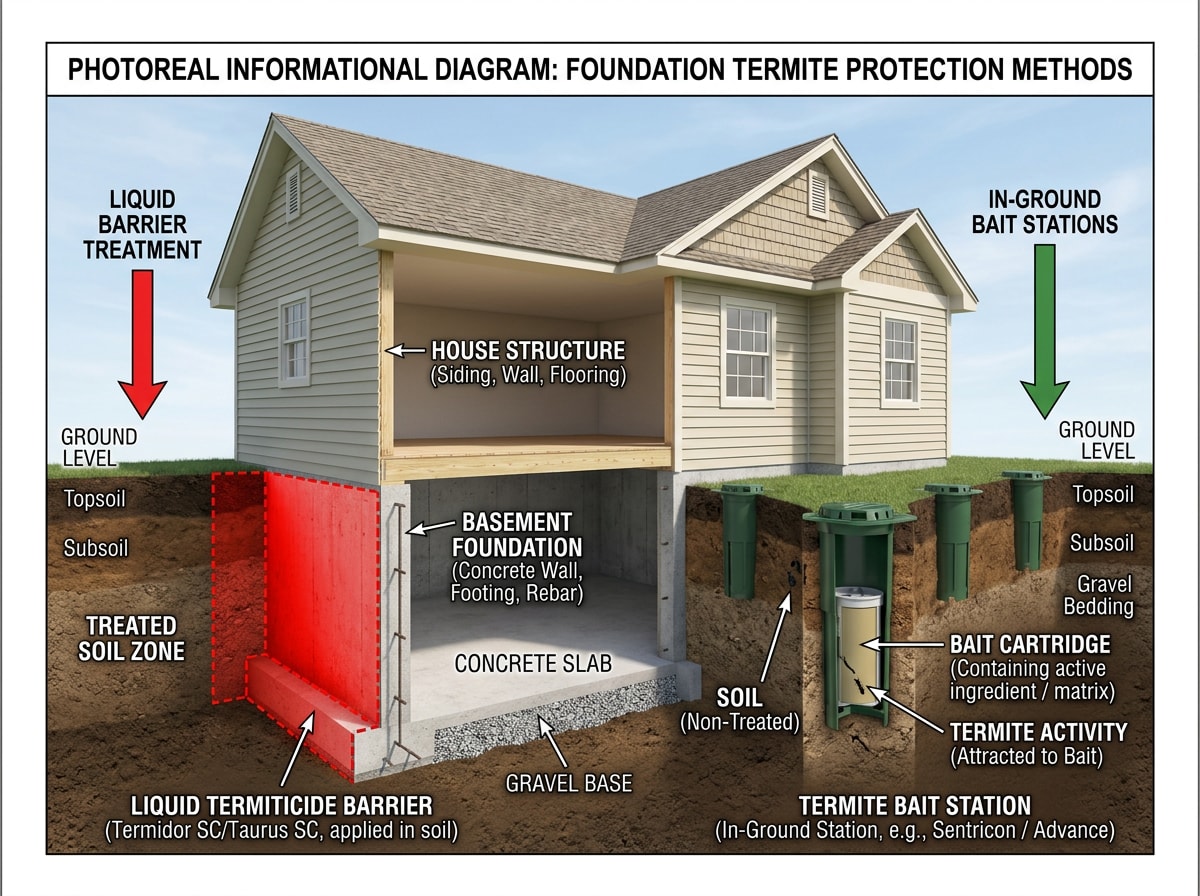
| Liquid barrier | Eastern subterranean termites | Creates a continuous chemical zone in the soil around the foundation |
| Bait stations | Eastern subterranean termites, ongoing monitoring | Worker termites carry slow-acting bait back to the colony, reducing the population over time |
| Localized wood treatment or fumigation | Drywood and dampwood termites | Targets specific pieces of infested lumber without requiring soil contact |
Approved treatments include liquid soil-applied termiticides, and in most cases, termiticide application can only be properly performed by a trained pest management professional , according to the EPA's guidance on termite identification and control. That's also where product selection matters: products that only claim to kill termites have not demonstrated the ability to protect structures against termites , which is why a treatment plan needs to target the colony, not just visible activity.
Our Integrated Pest Management Approach
Rather than defaulting straight to chemical treatment, we follow an integrated pest management process for every termite case:
- Full inspection and evaluation of the pest problem.
- Recommendations for structural repairs or modifications that remove what's attracting termites.
- Practical changes to habits or conditions that discourage pest presence, such as moisture buildup or wood-to-soil contact.
- Selection of the lowest-risk control measures appropriate for the situation.
- Direct review of results with you, so you understand exactly what was done and why.
This matches the framework public health agencies recommend for structural pests, including termites, as part of a broader low-risk approach to building pest management.
Termite Prevention Tips for Medford Homeowners
Prevention combines three things: consistent moisture control, professional monitoring, and a long-term protection plan.
- Schedule regular inspections. A yearly check focused on moisture-prone areas, crawl spaces, and foundation lines catches most issues before visible damage appears.
- Fix moisture sources early. Grading soil away from the foundation, repairing gutters, and improving crawl space ventilation remove the conditions termites need. Our foundation sealing and crawl space remediation services both address this directly.
- Invest in professional treatment. Advanced extermination techniques target the colony at its source, rather than relying on surface-level DIY sprays that only address what's visible.
- Consider a termite warranty. Coverage typically includes re-treatment if termites return, and sometimes repair costs for new damage found during the coverage period. Confirm the coverage length, what triggers re-treatment, and which exclusions apply before signing.
For a closer look at how treatment choices play out once a colony is confirmed, our termite killer guide for Revere, MA covers the same core methods in more depth.
Termite Control Services We Offer in Medford, MA
Local homes face more than just termites, but termite control is one of our most requested services. A typical engagement starts with a full inspection to identify species and activity level, followed by a treatment plan matched to what's found.
- Termite Treatment
- Termite Inspection
- Termite Extermination
- Termite Damage Inspection
- WDI Form 33 Inspections
- Residential Pest Inspection
Because what termite control Medford, MA homeowners need depends on the property's age, foundation type, and surrounding soil moisture, no two treatment plans look identical. Ongoing monitoring then confirms the treatment is holding and catches any new activity early.
Schedule a free inspection to get your property checked before swarm season arrives.
Protecting Your Massachusetts Home
Eastern subterranean termites pose the greatest risk to most Massachusetts properties, but dampwood and drywood species can still cause real damage under the right conditions: a leaking roofline, a damp crawl space, or a piece of untreated imported lumber. Protecting your home means staying alert to all three, not just the most common one.
Visit our homepage to see our full range of pest services, or go straight to scheduling an inspection to find out where your property stands.
FAQ
What Is a Termite's Worst Enemy?
Certain ant species, parasitic nematodes, and specific fungi are natural termite predators that can reduce colony numbers in the wild. None of these occur reliably or in strong enough concentrations to control an infestation inside a home, which is why professional treatment remains the dependable option once termites have moved into a structure.
Why Are Termites Called the "Silent Destroyers"?
Termites earn the nickname because they operate almost entirely out of sight, chewing through wood from the inside for months or years before anyone notices. By the time hidden damage becomes visible, such as sagging floors, blistered paint, or hollow-sounding wood, the infestation has usually been active for a long while.
What Makes the Boston Area a Termite Hotspot?
The Boston area's long history and abundance of wood-frame architecture make it an attractive target for subterranean termites. Older homes often have aging wood framing, historic additions, and foundations that have shifted over decades, all of which create easy entry points. Medford's mix of older homes carries some of that same elevated risk.
Are Homes in the Northeast Vulnerable to Termite-Infested Mulch and Lumber?
Climate change is likely to increase the challenge posed by invasive species, and a global assessment of invasive termite species under climate change found potential for distribution shifts in new regions , according to a peer-reviewed study on invasive termites and climate change. Termite-infested mulch and lumber shipped in from termite-heavy regions of the country are a plausible pathway for new species to arrive locally, though the dominant local threat, for now, remains the Eastern subterranean termite.
How Much Does Termite Treatment Cost in Medford, MA?
Pricing depends on the treatment method, the size of the structure, and how far the infestation has spread. Liquid barrier treatments and bait station systems are typically priced differently, and a fumigation job for a confined drywood problem costs less than a whole-perimeter subterranean treatment. Request a free on-site inspection for an accurate quote based on your property.
How Often Should a Medford Home Be Inspected for Termites?
Once a year is the standard recommendation for most homes, timed ideally before spring swarm season. Homes with a history of termite activity, a damp crawl space, or wood-to-soil contact near the foundation benefit from more frequent checks.