
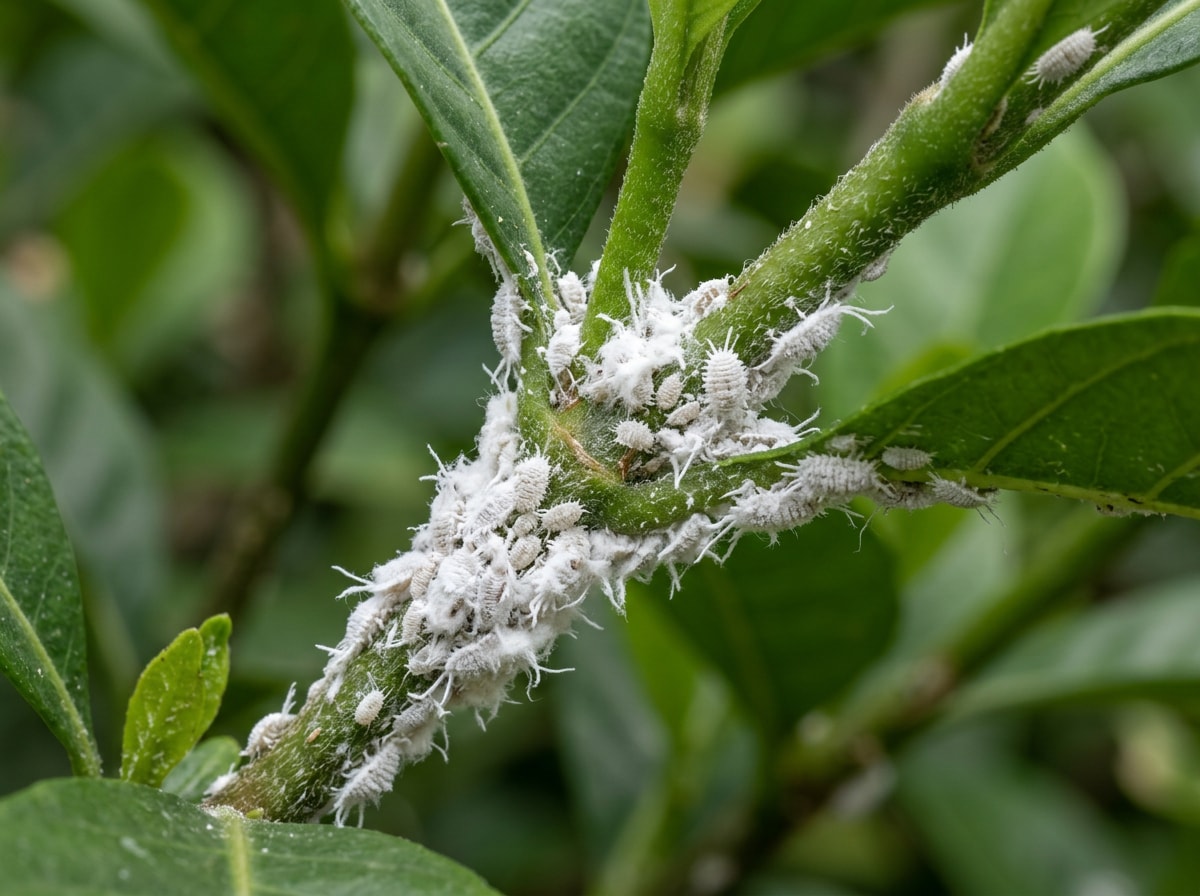
The best insecticide for mealybugs in Middleton depends on how far the infestation has already spread, not which bottle has the flashiest label. Those cottony white tufts hiding in leaf joints are mealybugs feeding on plant sap, and a handful this week can turn into hundreds within a month if you treat them with a single spray-and-forget application. Below is the exact order of treatments to try, the products that back them up, and why some of the "best" mealybug sprays on store shelves barely scratch an adult mealybug's waxy shell.
Quick Answer: What to Use at Each Stage
- Light infestation (a few bugs): Dab directly with 70% isopropyl alcohol on a cotton swab for near-instant kill.
- Moderate infestation (clusters on multiple leaves): Insecticidal soap, sprayed to full coverage and repeated every 5-7 days.
- Heavy or recurring infestation: A systemic insecticide containing imidacloprid, applied as a soil drench, with important pollinator precautions below.
- Organic preference: Neem oil, most effective against immature mealybugs rather than waxy-coated adults.
If the infestation has already spread through a whole plant collection or an outdoor bed, a faster path is a professional inspection. Schedule a free inspection and a licensed technician can identify the mealybug species and the least-toxic effective option before more damage sets in.
What Are Mealybugs? Quick Identification Facts
The protective waxy coating of adult mealybugs and their tendency to hide makes contact insecticides less effective, though insecticidal soaps, horticultural oils, and neem oil applied directly to immature mealybugs can reduce numbers. That waxy layer is the single biggest reason a spray that works great on aphids can completely fail on mealybugs.
Check leaf joints, the undersides of leaves, new growth, and the soil line near the stem, since these are the spots mealybugs prefer to hide. If you spot cottony clusters, isolate the affected plant immediately so the infestation doesn't spread to neighbors on the same windowsill or bench.
In Middleton, we see this most often on plants that spent the summer outdoors, hoya, holiday cactus, and succulents brought back inside before the first frost, carrying a mealybug colony that nobody noticed until the plant was already indoors for weeks. Humid New England summers also push populations up fast on boxwood and euonymus hedging outdoors.
Mealybug Treatment: Step-by-Step (Indoors and Outdoors)
Both indoor and outdoor mealybug problems respond best to a step-up approach: start gentle, then escalate only if the gentler method isn't keeping pace. Jumping straight to a systemic insecticide on a light infestation is usually overkill and introduces unnecessary risk around pets, pollinators, or edible plants.
Step 1: Manual Removal
A cotton swab or soft cloth dipped in 70% isopropyl alcohol wipes out individual bugs and clusters on contact. Spot-test on a single leaf first and wait 24 hours to check for discoloration before treating the whole plant. This step alone often resolves light infestations within a week or two.
Step 2: Insecticidal Soap
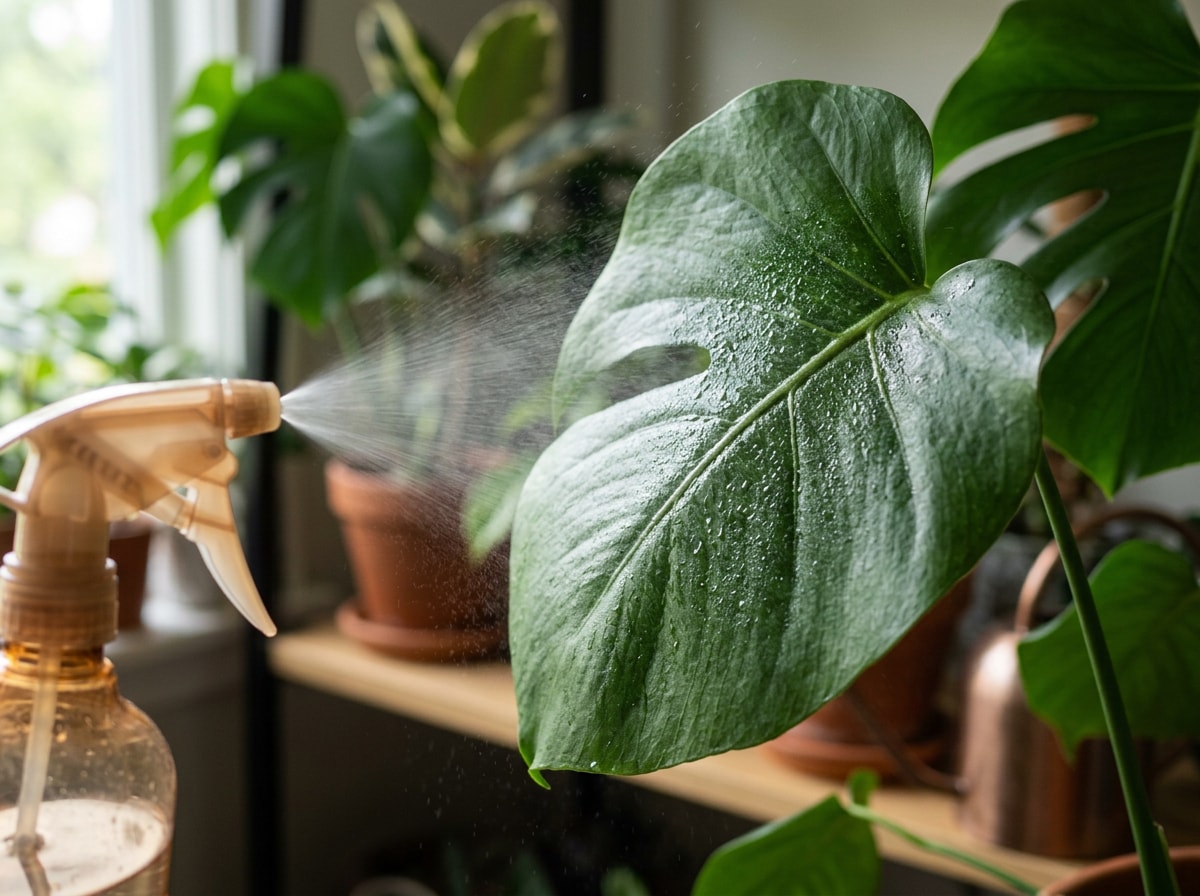
Insecticidal soap works by breaking down the mealybug's outer coating rather than leaving a chemical residue behind, which makes it a reasonable fit for homes with pets or young children. Coverage matters more than the product itself here.
- Spray thoroughly on the undersides of leaves, stem joints, and any crevice where mealybugs cluster.
- Missed spots simply regrow the colony.
- Reapply every 5-7 days for two to three cycles, since soap has no residual effect on eggs that hatch later.
Step 3: Systemic Insecticide for Severe Cases
A systemic insecticide works because the plant absorbs the product through its roots or leaves, and insects ingest it while feeding on sap, bypassing the waxy coating problem entirely. Contact insecticides will kill young, immature crawlers provided there is good coverage, but as eggs hatch, repeated applications are needed, and the waxy covering on the adult mealybug makes it very difficult for insecticides to be effective.
That strength comes with a real tradeoff worth knowing before you buy. The EPA's pollinator protection program has taken direct action on this exact active ingredient, including cancelling spray uses of imidacloprid on residential turf due to health concerns tied to pollinator exposure. Save systemic treatment for non-flowering ornamentals or houseplants, and avoid it on anything bees might visit.
Why Mealybugs Are Harder to Kill Than Marketing Suggests
This is the part most product pages skip. Mealybugs are very difficult to manage with insecticides, and the research backs up why a single spray rarely finishes the job.
Researchers at Kansas State University reported less than 50% mortality when using the systemic insecticides azadirachtin, dinotefuran, flonicamid, imidacloprid, spirotetramat and thiamethoxam against citrus mealybugs, whether products were applied preventively or curatively as growing medium drenches. That single data point is worth sitting with before assuming a soil drench is a one-time fix.
Resistance is also a documented, growing problem. Prolonged use of a single insecticide can lead to resistance in mealybugs, so rotating insecticides with different modes of action is essential to mitigate resistance development. That's one reason we rotate contact and systemic products rather than repeating the same one indefinitely on recurring accounts.
Biological Control (No Spray Required)
Look for parasite pupae within mealybug colonies, small, darkened, mummy-like shells are a sign that beneficial wasps are already working on the problem. Leptomastix dactylopii is sold commercially for release in greenhouses, citrus groves, and interiorscapes, but it kills only the citrus mealybug.
The mealybug destroyer can be purchased for augmentative release and is often used in greenhouses and interiorscapes, or in citrus orchards after a cold winter has killed off native populations.
Spray Comparison: Insecticidal Soap vs. Neem Oil vs. Systemic
| Treatment | Speed | University-Documented Effectiveness on Mealybugs | Key Safety Note | Best For |
|---|---|---|---|---|
| Insecticidal soap | Fast, needs weekly repeats | Rated "suppression" in extension lab testing | Minimal residue, dries within hours | Houseplants, light-moderate infestations |
| Neem oil | Moderate, needs weekly repeats | Rated "suppression," weaker on waxy-coated adults | Avoid spraying in direct sun | Organic gardens, immature mealybugs |
| Systemic (imidacloprid) | Slow, days to weeks | Mixed results in field research; under 50% mortality reported in one university study | Not for flowering or bee-visited plants | Severe, recurring, non-flowering ornamentals |
Horticultural oil acts primarily by smothering with no residual effects, insecticidal soap is a contact insecticide with no residual effects, neem insecticides act to disrupt growth of some developing insects, and neem oil is a plant-derived horticultural oil, according to Colorado State University Extension's testing of common houseplant insecticides.
Most Effective Products by Category
Rather than listing a dozen near-identical products, here are three that represent the main categories worth knowing by name.
Systemic: Dominion 2L Insecticide
Dominion 2L contains the active ingredient imidacloprid and works systemically, moving through the foliage and root systems of plants to stop mealybugs from further damaging the plant.
It's generally recommended for larger plants and landscape ornamentals rather than small indoor pots. Because imidacloprid carries pollinator restrictions noted above, apply it only during non-flowering periods and keep it off anything bees visit.
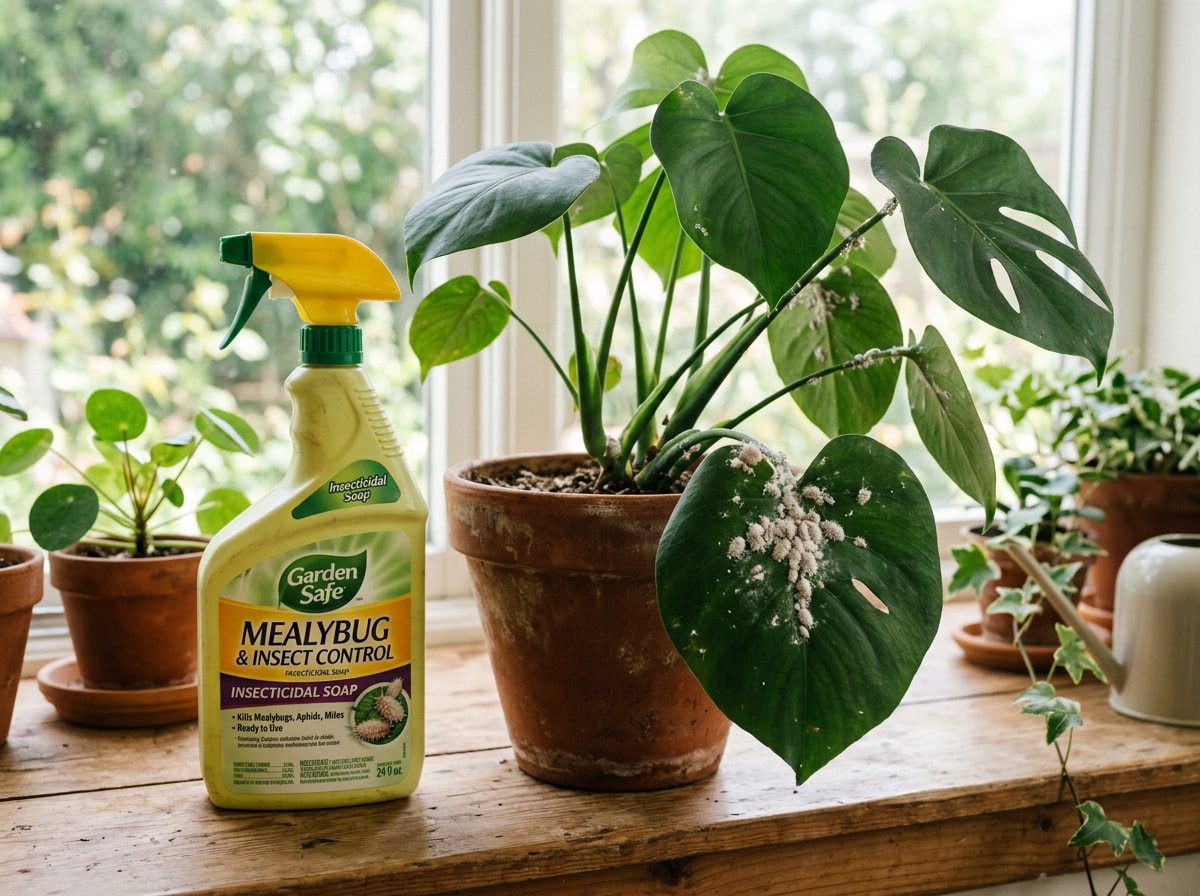
Insecticidal Soap: Garden Safe Insecticidal Soap Ready-to-Use
A pre-mixed, ready-to-use option labeled for mealybugs, aphids, and mites, which removes guesswork around dilution ratios for houseplant owners. It still only works on contact, so thorough spraying of leaf undersides and stem joints is required, the same coverage rule that applies to any insecticidal soap.
Neem Oil: Bonide Captain Jack's Neem Oil Ready-to-Use Spray
A cold-pressed neem product that disrupts insect feeding and growth cycles over repeated applications rather than killing instantly. It works best on immature mealybugs, since adult waxy coating limits how well the oil penetrates, so pairing it with manual removal on visible adult clusters gets a more complete result.
Preventing Repeat Infestations
Prevention comes down to consistency. Check plants regularly for cottony clusters, especially at leaf joints and the soil line, and treat small problems before they spread into a full infestation.
- Inspect new plants before bringing them indoors or near other plants.
- Quarantine anything suspicious for two weeks.
- Check overwintered outdoor plants closely before moving them back outside in spring.
- Rotate treatment types (soap, neem, manual) rather than repeating one product indefinitely to reduce resistance risk.
Outdoors, companion planting helps too. Growing dill and parsley near vulnerable plants attracts beneficial insects like ladybugs, a natural mealybug predator, adding a layer of defense without any spraying at all.
For homes already seeing mealybugs spread from plants into carpets, baseboards, or spilling into a broader pest problem, our general pest inspection identifies entry points and conditions attracting pests beyond what a spray bottle can fix. Residents across Middleton can also browse our residential pest inspection service for a full home assessment.
When to Call a Professional
If you've rotated through manual removal, insecticidal soap, and a careful systemic application and clusters keep reappearing at the soil line, that's the signal a DIY approach has hit its limit. Lighthouse Exterminators provides bug and insect extermination across Middleton and the greater Boston area, with technicians trained to identify the exact mealybug species and apply treatment that won't harm pets, kids, or pollinators nearby.
Visit our Middleton service area page for local details, or browse the full pest control service lineup from the Lighthouse Exterminators homepage.
FAQ
What kills mealybugs instantly?
Dab visible bugs with 70% isopropyl alcohol for near-instant results, then follow up with a thorough insecticidal soap spray repeated every 5-7 days to catch newly hatched eggs the alcohol missed.
What are mealybugs?
Mealybugs are small, soft-bodied, sap-sucking insects that coat themselves in a white, waxy secretion, giving infested plants a fuzzy, cotton-like appearance at leaf joints and stems.
Can you save a plant with a severe mealybug infestation?
Yes, if treated early and consistently. Combine manual removal, insecticidal soap, and isolation from other plants. If the plant is already badly weakened or the infestation has spread to the root system, discarding it is often more practical than continued treatment.
Is neem oil effective against mealybugs?
Neem oil applied directly to immature mealybugs can reduce their numbers over time, but adult mealybugs' waxy coating limits how well the oil penetrates. It works best as part of a rotation, not a standalone fix for established colonies.
What is the best systemic insecticide for mealybugs?
Imidacloprid-based systemics, like Dominion 2L mentioned above, are commonly used for severe or recurring cases because they're absorbed into plant tissue and kill insects as they feed. They are not guaranteed, though; independent university testing has found inconsistent mortality rates even with proper application, and they carry pollinator restrictions that rule out use on flowering plants.
Is it safe to use mealybug insecticide around pets and kids?
Insecticidal soap dries with minimal residue and is a reasonable choice around pets and children when used as directed. Systemic products containing imidacloprid are absorbed into the plant itself and carry different handling and placement precautions, so read the label fully and keep treated plants out of reach during the application window.