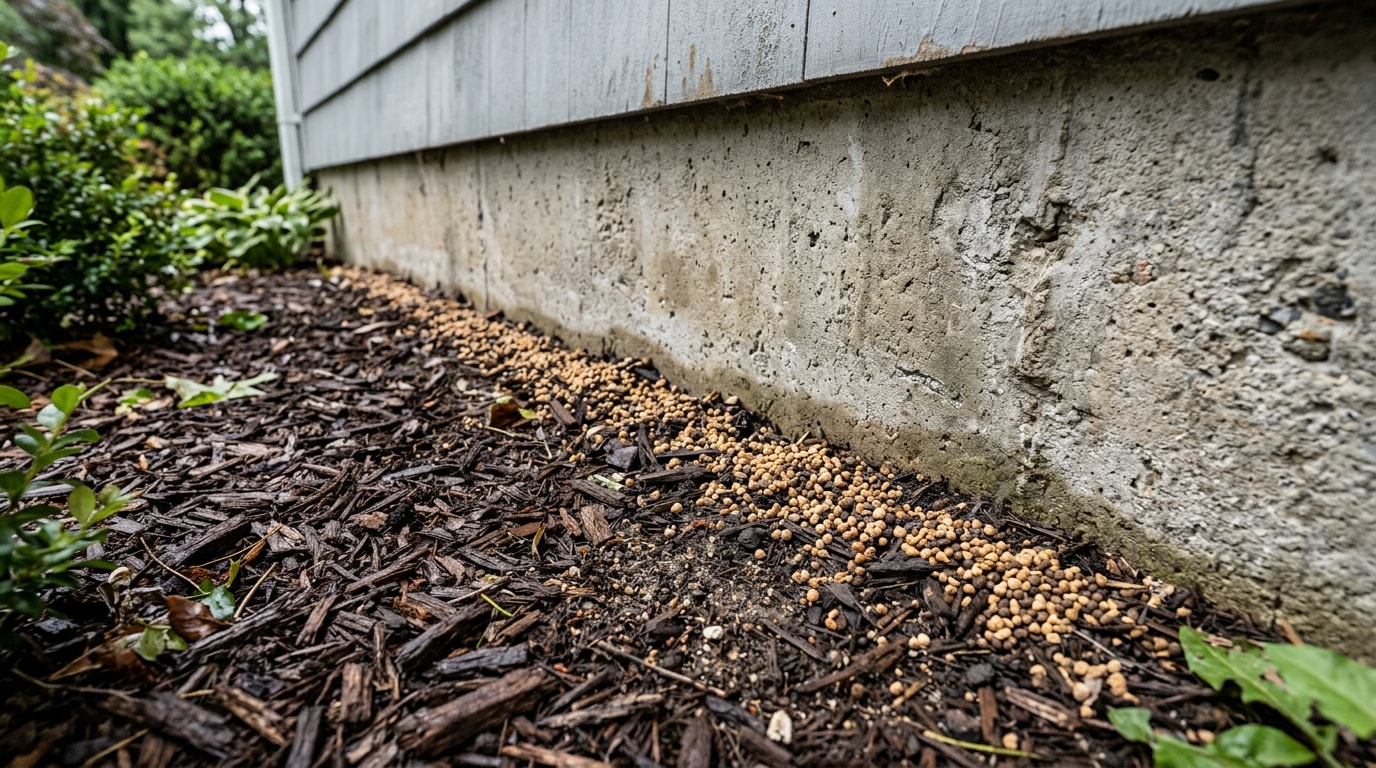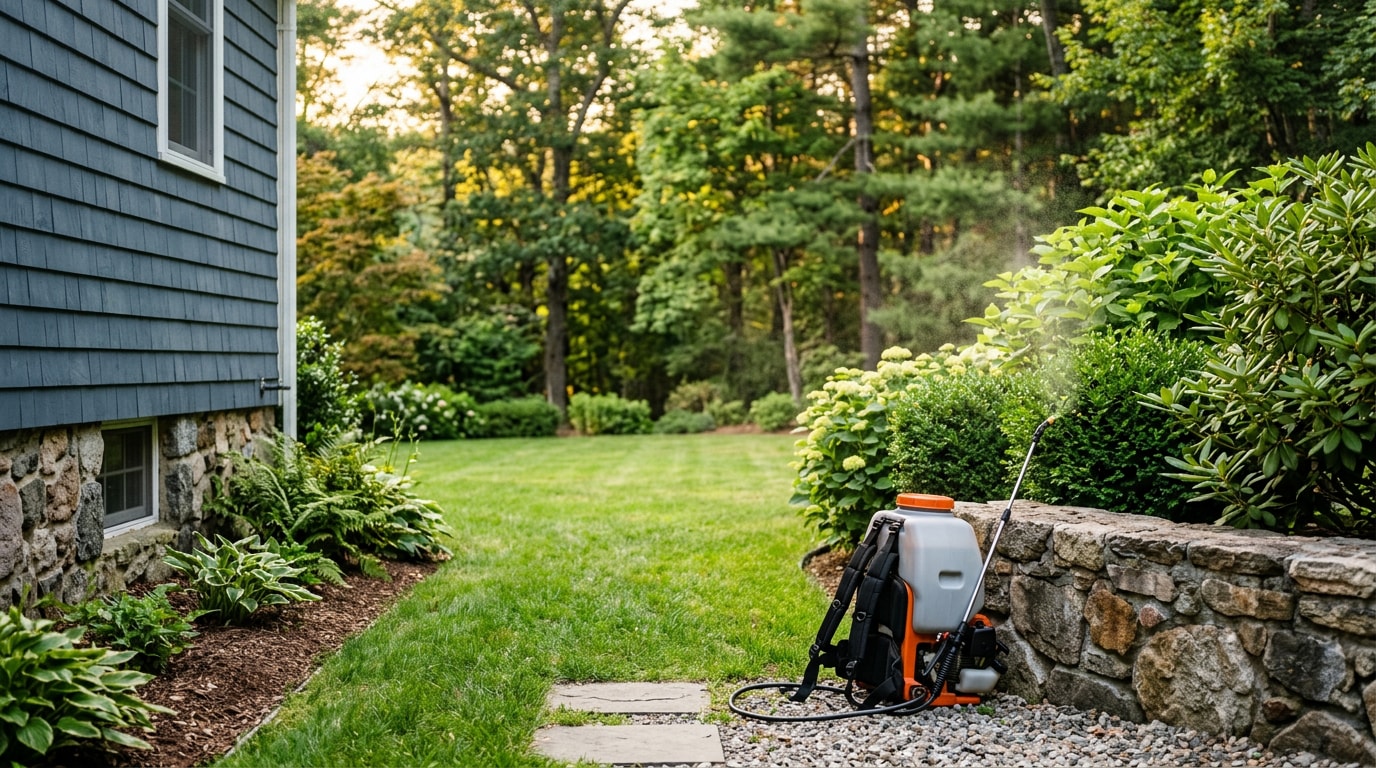

Fire ant poison in Boston, MA isn't a simple grab-and-go purchase, because the ant stinging your lawn almost certainly isn't the species the product label was written for. This guide covers which fire ant is actually living in Boston-area yards, which products are worth buying, and why the standard "two-step" method sold nationally doesn't always hold up here. Read through before you buy anything, and you'll skip a wasted season of DIY trial and error.
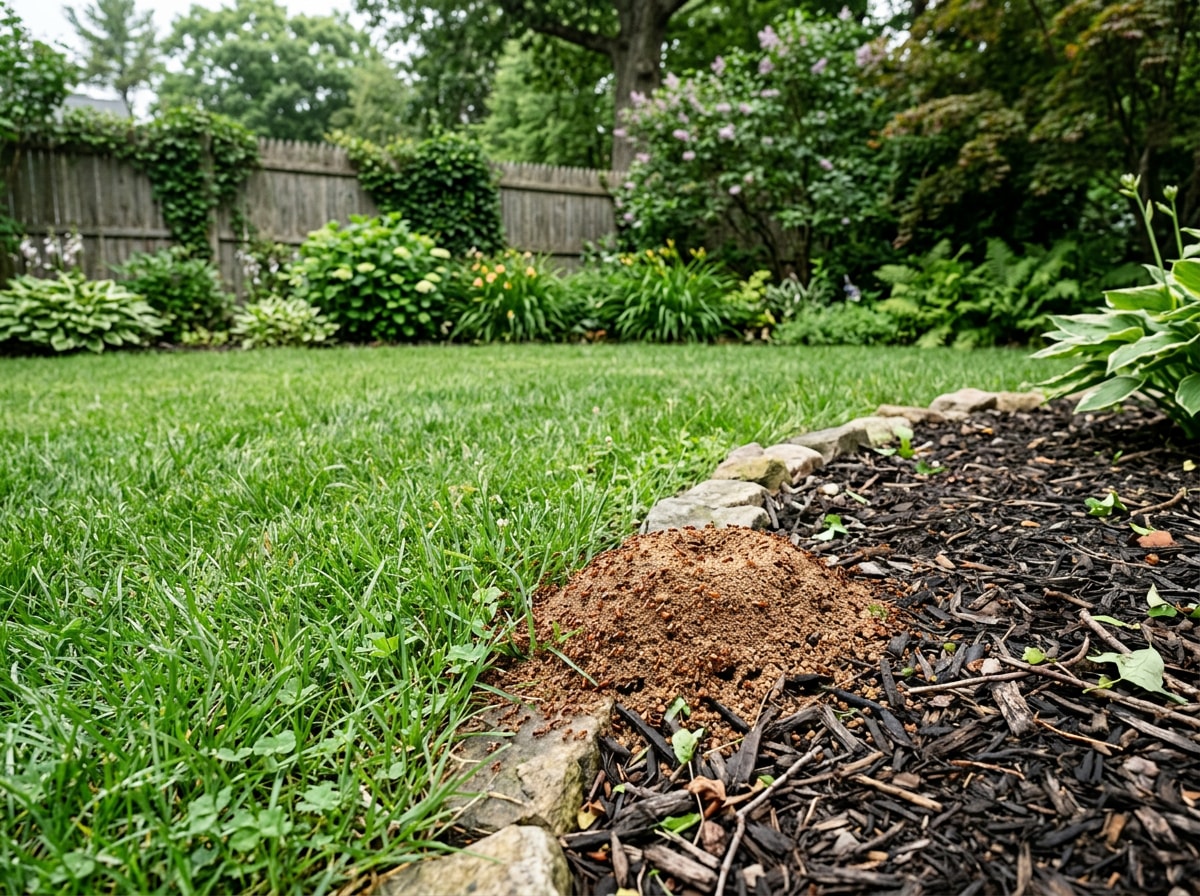
Fire Ants in Boston, MA: Which Species Are You Actually Fighting?
The red imported fire ant is a medically significant pest found solely in the southern states , so it's almost never what's living in a Massachusetts lawn.
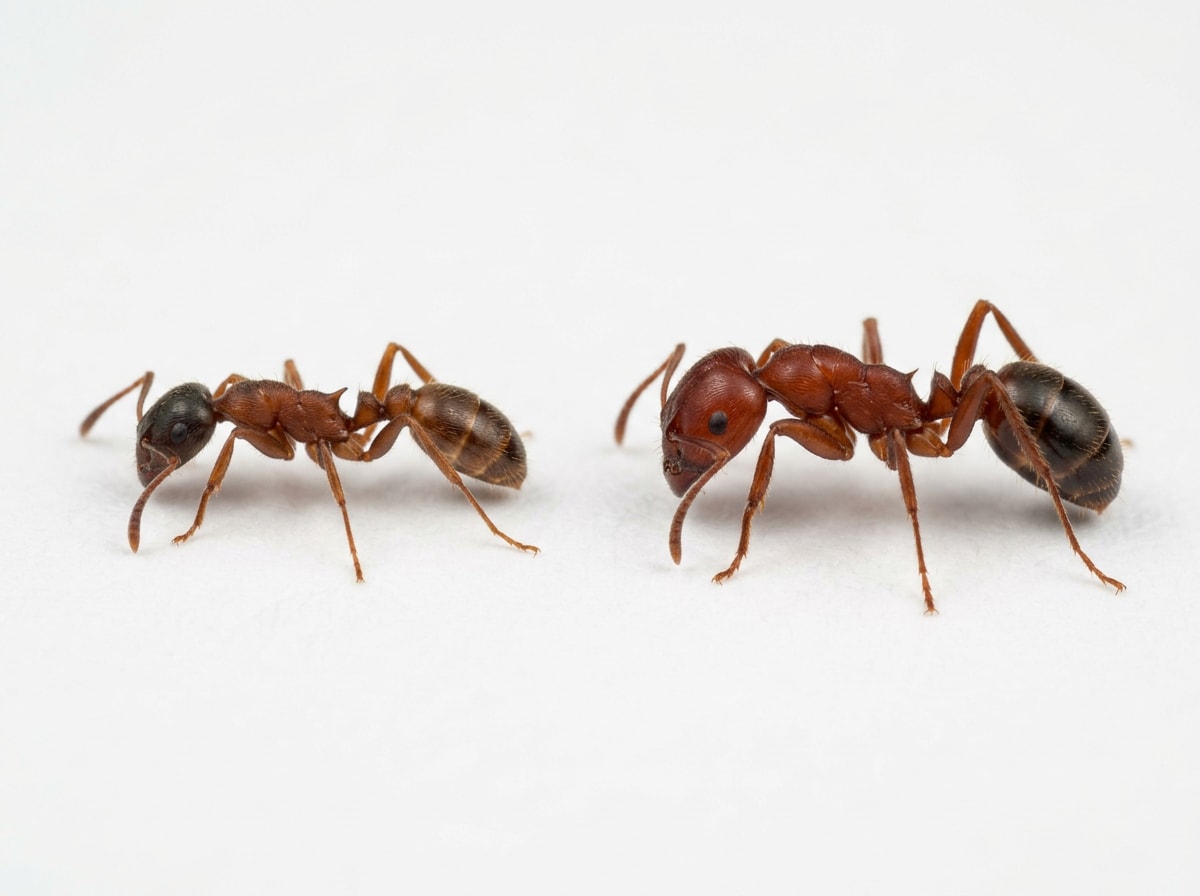
The ant actually causing problems here is the European fire ant, Myrmica rubra. This species was documented as inhabiting Massachusetts as far back as 1908 , long before "fire ants" entered the national conversation.
It's also not a one-time curiosity. A pair of yards in a Cambridge, Massachusetts neighborhood were invaded by Myrmica rubra, the European fire ant , a case serious enough that researchers got involved. A Harvard entomologist who studied the outbreak described European fire ants as being like a "cancer" on residential neighborhoods , because colonies tend to spread from one yard to the next.
Here's what makes identification tricky. European fire ants are very small, about 3/16th of an inch long, and red in color . Don't let the size fool you, though.
Colonies get large fast. They are moderate to large in size, contain multiple queens, and a single colony may hold more than 20,000 workers and 600 queens .
They also don't need warm weather to thrive. European fire ants thrive in cold weather and are found as far north as Siberia and the Arctic , which is why a Boston winter doesn't knock them back the way it does other pests.
Stings aren't a minor annoyance, either. Fire ants sting repeatedly and inject venom that causes intense burning pain, most people experience localized pustules at sting sites, and roughly 1 to 2 percent of people have systemic allergic reactions that can be life-threatening . It is not uncommon for sting victims in Massachusetts to become hospitalized as a result .
In our service calls across Greater Boston, we regularly find homeowners who bought the wrong product entirely because the bag pictured a red ant mound from Texas, not a New England lawn.
Fire Ant Poison Products Worth Buying in Boston, MA
Once you know which ant you're dealing with, picking a product gets easier. Here's a practical shortlist for homeowners, not an exhaustive professional-grade rundown.
- Ortho Orthene Fire Ant Killer — a widely available granule labeled for broadcast and mound application; a reasonable general-purpose starting point.
- Amdro Fire Ant Bait — a slow-acting bait ants carry back to the colony; best used as a broadcast treatment across the whole yard, not a single mound.
- Spectracide Fire Ant Killer granules — contact-kill granules suited for spot-treating one or two visible mounds.
- Syngenta Advion Fire Ant Bait — a professional-grade bait format sold to consumers, often used as the broadcast step of a two-step program.
- Diatomaceous earth dust — a non-chemical mound dust some homeowners use on smaller, isolated colonies.
A buying tip worth repeating: these labels are written around red imported fire ant behavior, not European fire ant behavior. That doesn't make them useless here, but it does mean following the label's broadcast instructions matters more than picking a specific brand name. For broader lawn pest options, see our ant treatment service.
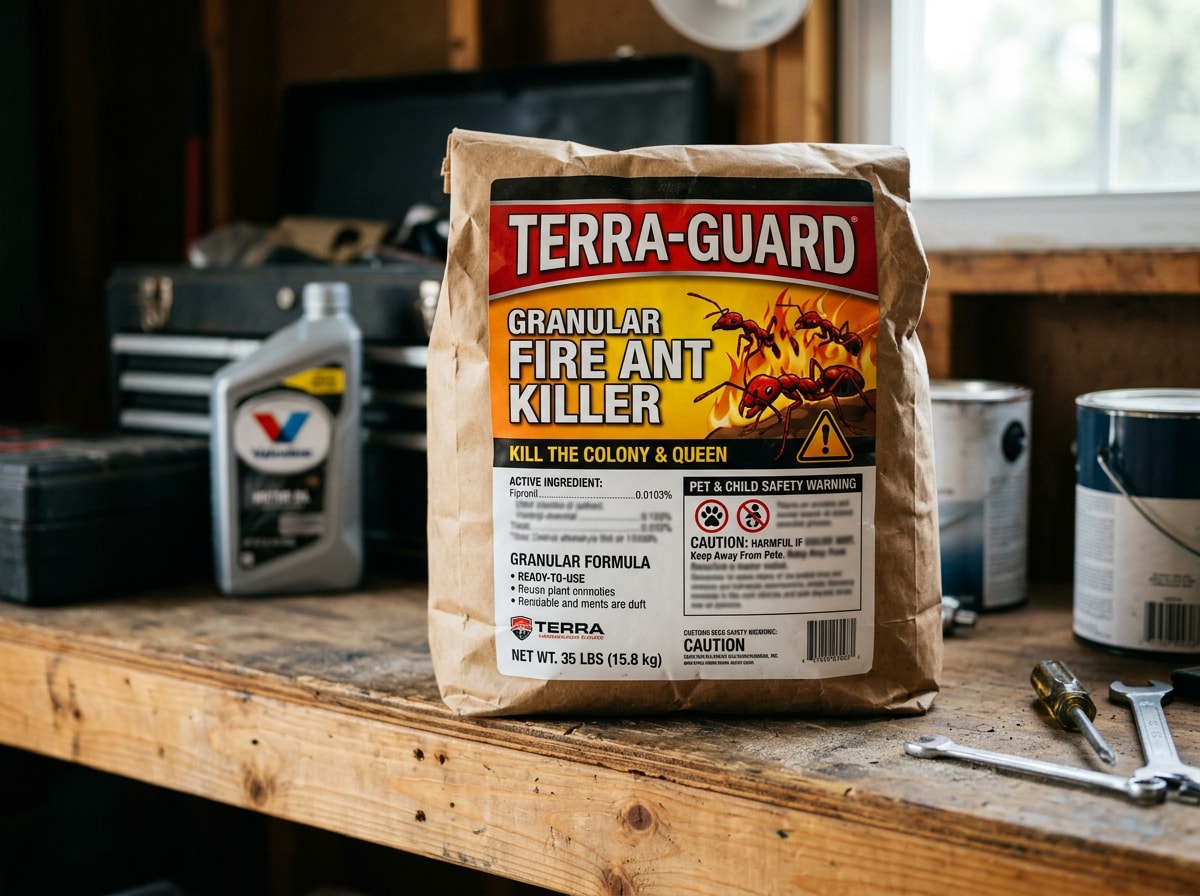
Comparison Chart: Fire Ant Poison Types at a Glance
| Product Type | Active Ingredient | Kill Speed | Indoor/Outdoor | Coverage |
|---|---|---|---|---|
| Granule broadcast | Permethrin | Fast (hours to 1 day) | Outdoor | Whole yard |
| Mound dust | Permethrin/Deltamethrin | Fast | Outdoor | Single mound |
| Bait (slow-acting) | Hydramethylnon/Borax | Slower (days to weeks) | Outdoor | Whole yard |
| Liquid drench | Lambda-cyhalothrin | Fast | Outdoor | Single mound |
This reflects products actually sold at major retailers today, not hypothetical formulations.
Why the National "Two-Step" Method Doesn't Always Work Here
Most fire ant content online repeats the same advice: broadcast bait across the yard, then spot-treat visible mounds. That program was built and tested on red imported fire ants, and extension research on European fire ants tells a more mixed story.
Research over the last decade has shown that chemical control is currently the most effective way to suppress ant populations, and bait-formulated pesticides are the most effective treatment , according to University of Maine Cooperative Extension, which studies Myrmica rubra specifically. That supports broadcasting bait as a starting point.
But not every format performs the same. Bait stations are not as effective as broadcasting baits directly on the ground, though they may be the only option in sensitive areas such as where children and pets play or near wetlands, and they also reduce the risk of pesticide run-off .
Other regional best-practice guides go further, noting that baits have been shown to offer limited to poor control for this species, and instead recommend locating every individual nest and treating it directly. One university-hosted control guide for homeowners recommends the use of 0.25% permethrin applied straight into each nest rather than relying on bait alone.
The honest takeaway: there isn't one universally "best" fire ant poison for Boston yards. What's documented to work well in one region underperforms in another, which is exactly why missing even one nest lets the colony network bounce back within weeks.
If you'd rather not guess which approach your yard needs, schedule a free inspection and we'll map the nests before recommending a product.
Buying Guide: What Actually Matters
Active ingredient drives how fast a product works. Contact killers like permethrin and lambda-cyhalothrin knock down ants quickly on touch. Slower baits rely on foragers carrying poison back to the queen. Granule versus bait isn't really an either/or choice; many homeowners use both.
Safety matters on both ends. Fire ants pose a sting risk to pets and kids, but the poison also needs a pet-safe label and proper distance from play areas.
Lawn ecosystem impact is worth weighing too. Best management practices include applying insecticides when pollinators are not foraging for pollen or nectar and keeping application equipment in good working order , per EPA guidance on pollinator protection. Broad-spectrum granules can affect beneficial insects along with the ants you're targeting, so spot-treating known mounds is usually gentler on the yard than a blanket broadcast.
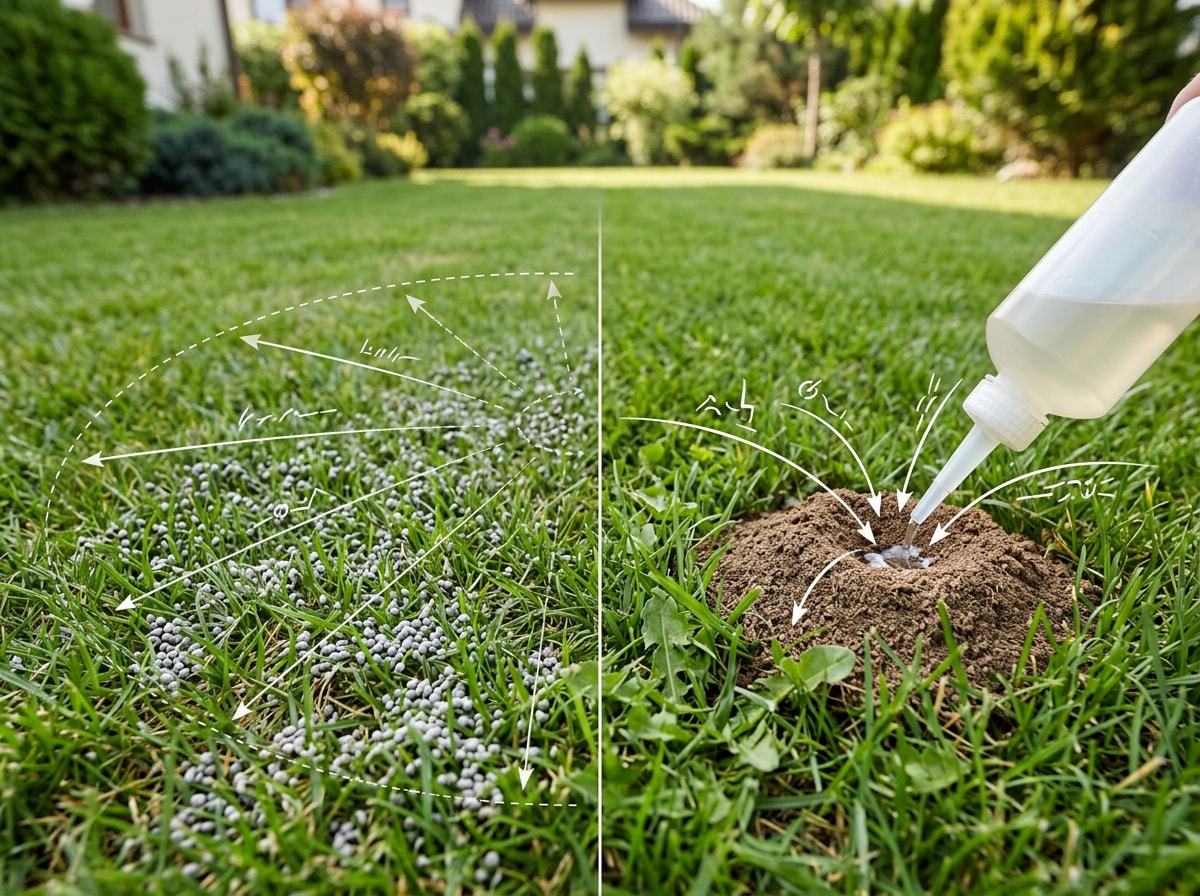
Treatment Timeline and Re-Inspection
Re-treatment timing matters more than most product labels let on.
- Check mounds again 2 to 4 weeks after the first application, since bait needs time to work through the colony.
- If you used a direct nest treatment, re-inspect the same spot after 1 to 2 weeks for new activity.
- Walk the full property, not just the original mound. Colonies are polydomous, meaning one nest you treat can simply be a satellite of another you haven't found yet.
- Skipping re-inspection is the most common reason DIY treatment seems to "fail."
Homeowners researching ant identification elsewhere in Massachusetts may also run into other reddish, non-stinging look-alikes, such as the species covered in our guide to citronella ants in Reading, MA, which are often mistaken for fire ants at first glance.
FAQ
Are there fire ants in Massachusetts?
Yes, but it's the European fire ant (Myrmica rubra), not the red imported fire ant most people picture. The southern species hasn't established itself in Massachusetts.
How long does it take for fire ant poison to work?
Contact killers work within hours to a day. Baits containing borax or hydramethylnon work slower, often days to weeks, since ants carry it back to the colony.
Can I use fire ant poison indoors?
Most fire ant poisons are labeled for outdoor mound or broadcast use only. For indoor activity, choose a product specifically labeled safe for indoor application.
Will Dawn dish soap and water kill fire ants?
Soapy water can kill ants on contact, but it rarely reaches the queen or colony. It's not a reliable substitute for a proper bait or contact treatment.
How much does professional fire ant treatment cost in Boston?
Fire ant treatment can be eliminated for an estimated cost of $100 to $400 , depending on lot size and infestation density. That's a useful benchmark against DIY product costs. A professional ant extermination visit also includes a nest survey, which DIY treatment skips entirely.
How do I find all the fire ant nests in my yard?
Walk the property in warm, dry weather when ants are most active on the surface. Check lawn edges, under pavers, around deck footings, and in mulch beds. Mark every mound before treating, since colonies are often connected underground.
Are European fire ant stings dangerous to kids and pets?
They can be. Most stings cause painful, localized swelling, but a small percentage of people and pets have more serious allergic reactions. Keep children and pets away from marked mounds until treatment is complete.
Still unsure what's in your yard or which product fits your situation? Schedule a free inspection with our Boston-area team, browse our full pest control services, or visit our Boston, MA service page. You can also explore more pest guides on our homepage.