
Searching for a carpenter ant exterminator near me in Foxborough, MA usually starts with a pile of sawdust on a windowsill or a trail of large black ants crossing the kitchen counter after dark. Carpenter ants don't eat wood, but they hollow it out to build nests, and a colony left alone can spend years quietly weakening sills, deck ledgers, and attic framing. This guide covers how to tell carpenter ants from termites, what a professional treatment visit actually involves, and how to check that the company knocking on your door is actually licensed to be there.
Signs You Have Carpenter Ants, Not Termites
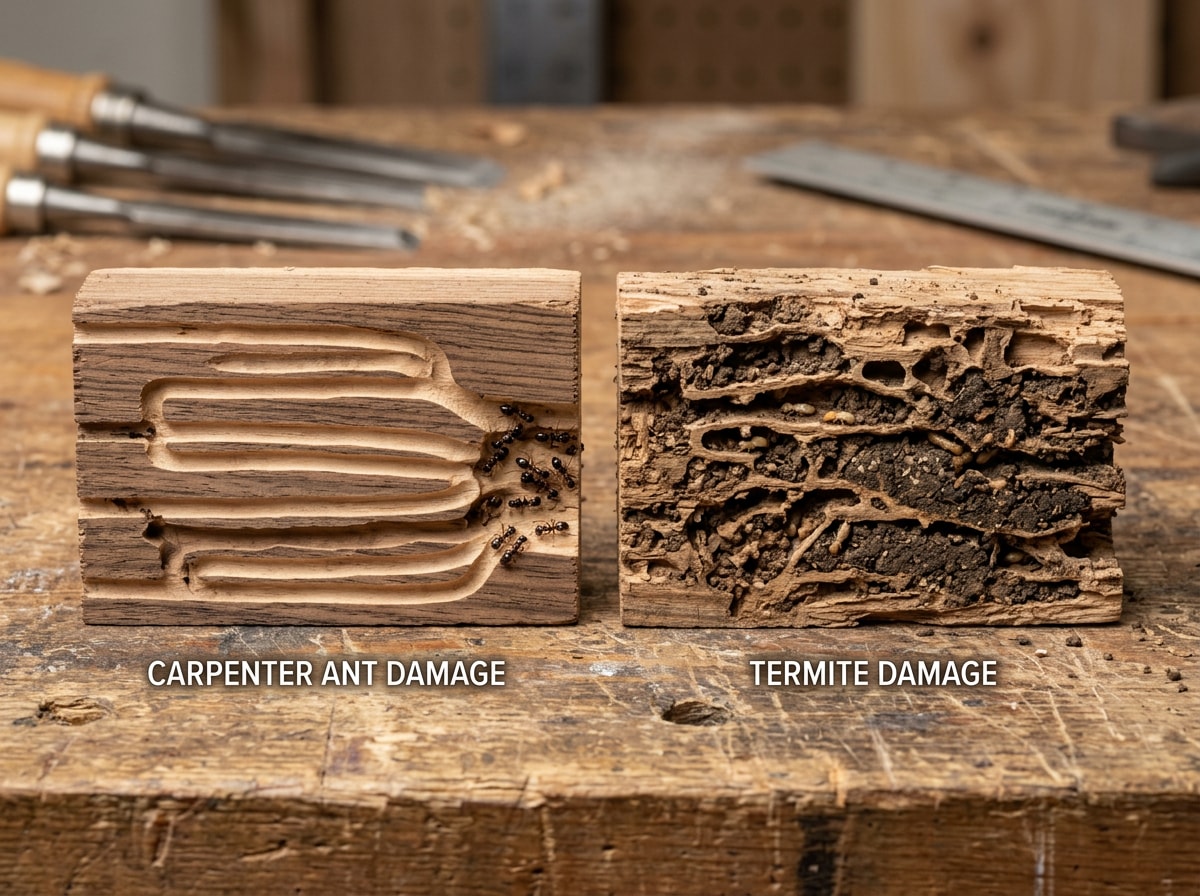
Carpenter ants excavate smooth galleries inside wood to house their colony, but they do not eat the wood itself the way termites do. That distinction trips up a lot of homeowners, since both pests show up in old, moisture-prone wood common in Foxborough's housing stock.
There's a reliable way to tell them apart once you know what to look for. Termite galleries are filled with soil, chewed wood and excrement, while ant tunnels stay meticulously clean. A UMass Amherst building technology guide on wood-destroying insects breaks this difference down in more detail if you want to compare damage yourself before calling anyone out.
Watch for these signs together, not in isolation:
- Small piles of sawdust-like frass near baseboards, window frames, or deck posts
- A faint rustling sound inside a wall at night
- Winged ants indoors, especially in spring
- A hollow or papery sound when you tap suspect wood
Carpenter ants are also genuinely difficult to eliminate once a colony is established, and some entomologists consider full eradication from an area nearly impossible without professional intervention. That's one reason DIY sprays on visible ants rarely solve the underlying problem.
How a Carpenter Ant Exterminator Treats an Infestation in Foxborough, MA
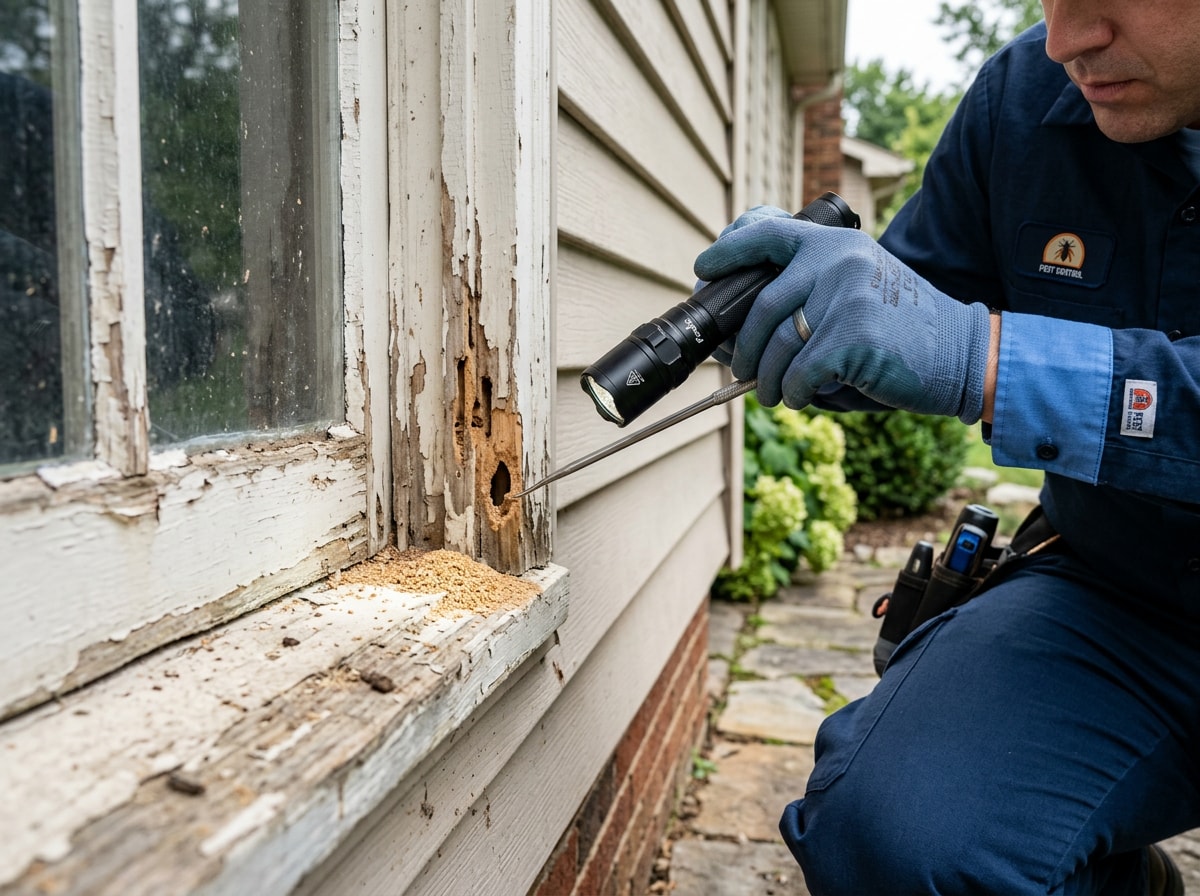
A proper visit starts with an inspection, not a spray can. The ants you see foraging on a counter are rarely the whole story. Technicians need to find nesting locations by following workers back to their nest wherever possible, then destroy both the indoor and outdoor, primary and satellite nests.
In our service calls across Foxborough, the colonies that keep coming back are almost always a missed satellite nest, not a failed product. That's the single biggest reason inspection-first treatment outperforms a quick perimeter spray.
A typical treatment sequence looks like this:
- Inspection – locate frass piles, listen for activity, trace forager trails back toward likely nest sites.
- Direct nest treatment – apply targeted product into wall voids, soffits, or confirmed galleries.
- Perimeter treatment – create a barrier around the foundation to stop new foragers from entering.
- Follow-up visit – confirm activity has stopped rather than just slowed down.
If you'd rather skip ahead, schedule a free inspection and a technician will walk the property with you before anything gets treated.
Carpenter Ants vs. Field Ants and Other Look-Alikes
Not every large black ant in a Foxborough home is a structural threat. Field ants, odorous house ants, and pavement ants all turn up in the same season and get misidentified constantly.
A carpenter ant's evenly rounded thorax, viewed from the side, is what separates it from field ants, along with its single node and the sawdust-like debris left outside nests and galleries. Field ants look similar at a glance but don't damage wood, which matters when you're deciding how urgently to act. A correct ant treatment plan starts with that identification step, not with a product choice.
Other Pests That Show Up Alongside Carpenter Ants
Carpenter ants rarely arrive alone on a Foxborough service call. A few other pests tend to follow the same moisture and entry-point patterns:
- Termites – different biology, different products; misidentifying the two means paying for the wrong termite treatment) entirely. Our termite killer guide for Revere, MA walks through the signs if you want a side-by-side comparison.
- Mice and rats – they exploit the same gaps and cracks carpenter ants use, so rodent control is often bundled into the same visit.
- Spiders – frequently show up where ant activity already exists, since both follow insect prey and moisture.
A single pest control service visit can usually address more than one of these at once, which saves a second service call and a second bill.
How to Choose a Licensed Carpenter Ant Exterminator Near You
Pricing and promises vary a lot between companies. A few checks narrow the field fast.
Confirm the license is active
Massachusetts requires anyone applying pesticides for hire to hold a current license through the Department of Agricultural Resources. For pesticide applicator licenses, the state's lookup tool shows a status of "Decision Rendered Active" when a license is current. Before you sign anything, it's worth running the company's name through the state's pesticide license lookup yourself. Most homeowners never think to do this, which makes it one of the fastest ways to separate a legitimate local exterminator from someone working without a credential.
Look for a full process, not a single spray
A full-service provider covers inspection, targeted treatment, a documented follow-up, and a prevention step such as exclusion work or a residential pest inspection. Treatment that stops after the first visit tends to miss satellite colonies.
Compare guarantee types before you sign
| Guarantee Type | What It Covers | Best For |
|---|---|---|
| Free reservice | A no-cost return visit if ants reappear within a set window | Homeowners who want a quick safety net |
| Satisfaction refund | A partial or full refund if the issue isn't resolved | Homeowners prioritizing accountability over speed |
| Annual renewal plan | Ongoing coverage with a yearly inspection and retreatment | Older homes with a history of recurring activity |
Ask directly whether the reservice is free or discounted, whether carpenter ants specifically are covered, and how many days the guarantee lasts. Get the answer in writing before the first treatment.
Carpenter Ant Activity by Season in Foxborough, MA
Activity shifts through the year, and knowing the pattern helps explain what you're seeing.
Spring: Winged carpenter ant swarmers typically appear in early spring and can be confused with winged termites , so a swarm indoors deserves a closer look rather than a shrug. Large, black ants of different sizes moving indoors without fighting each other are most likely carpenter ants rather than another species.
Summer: Foraging peaks, usually at night, with visible trails along baseboards, decks, and countertops.
Fall: Ants shift toward finding stable overwintering sites, sometimes moving deeper into wall voids as temperatures drop.
Winter: Indoor activity is less common but more telling. Ants seen inside during cold months usually point to an already-established nest in a heated void, not outdoor scouts passing through.
Best Pest Control Options Near Foxborough, MA
National franchise brands offer standardized pricing and consistent protocols across locations. Independent local providers often bring deeper familiarity with Foxborough-specific nesting spots, like older foundations and moisture-prone decks near the Neponset watershed. Neither is automatically better. It depends on whether you value brand consistency or hyper-local experience.
If you're comparing options, start with a company that actually services your Foxborough neighborhood and can show you a licensed, inspection-first process. Lighthouse Exterminators covers Foxborough and the surrounding South Shore towns with that exact approach.
FAQ
Are there carpenter ants in Massachusetts?
Yes. Carpenter ants are native and common throughout Massachusetts, including Foxborough, and they're among the most frequently reported structural pests in the state, particularly near wooded lots or homes with moisture-prone wood.
What's the real difference between carpenter ants and termites?
Carpenter ants excavate wood to build nests but don't eat it; termites eat wood for nutrition. Carpenter ant galleries are clean and smooth, while termite damage shows packed soil, mud tubes, and debris inside the wood.
Can I get rid of carpenter ants myself?
You can knock down visible foragers with store-bought spray, but that rarely reaches the nest. Lasting control depends on finding and treating the primary colony and any satellite nests, which is the part most DIY attempts miss.
Do carpenter ants bite, and are they dangerous to people?
They can bite if a nest is disturbed or they're picked up directly, and the bite can sting, but they don't carry disease or pose a serious health risk. The real risk is structural, not medical.
How much is monthly or quarterly pest control in Foxborough?
Pricing depends on property size, the extent of activity, and whether termites or rodents are involved alongside the ants. Requesting a free quote is the fastest way to get an accurate number for your specific home.
How long does carpenter ant treatment take to work?
Most homeowners see a sharp drop in visible activity within a few days of nest treatment, but a full follow-up visit is usually scheduled two to four weeks out to confirm the colony is gone rather than just quiet.