
Figuring out how to get rid of cicada killers in Jamaica Plain starts the moment you spot a wasp the size of your thumb hovering over a bare patch of lawn. These solitary ground-nesting wasps look alarming but rarely sting, and most Jamaica Plain yards clear up with a few targeted steps instead of a full insecticide program. Here's exactly what works, what's overkill, and when it's time to call in a pro.
Cicada Killer 101: Identification, Biology & Habits
Cicada killers (Sphecius speciosus) are among the largest wasps in Massachusetts. Adult females run close to two inches long, with a rusty-red head and thorax and wings tinged yellow. Locals sometimes call them ground digger wasps, since each female digs a burrow that leaves a distinctive U-shaped mound of loose soil at the entrance, with branching tunnels leading to multiple oval egg cells.
At Lighthouse Exterminators, our Massachusetts-licensed technicians field cicada killer calls across Jamaica Plain every July and August, and the pattern is almost always the same: a few sun-baked, loosely packed strips of soil along a driveway, fence line, or raised garden bed.
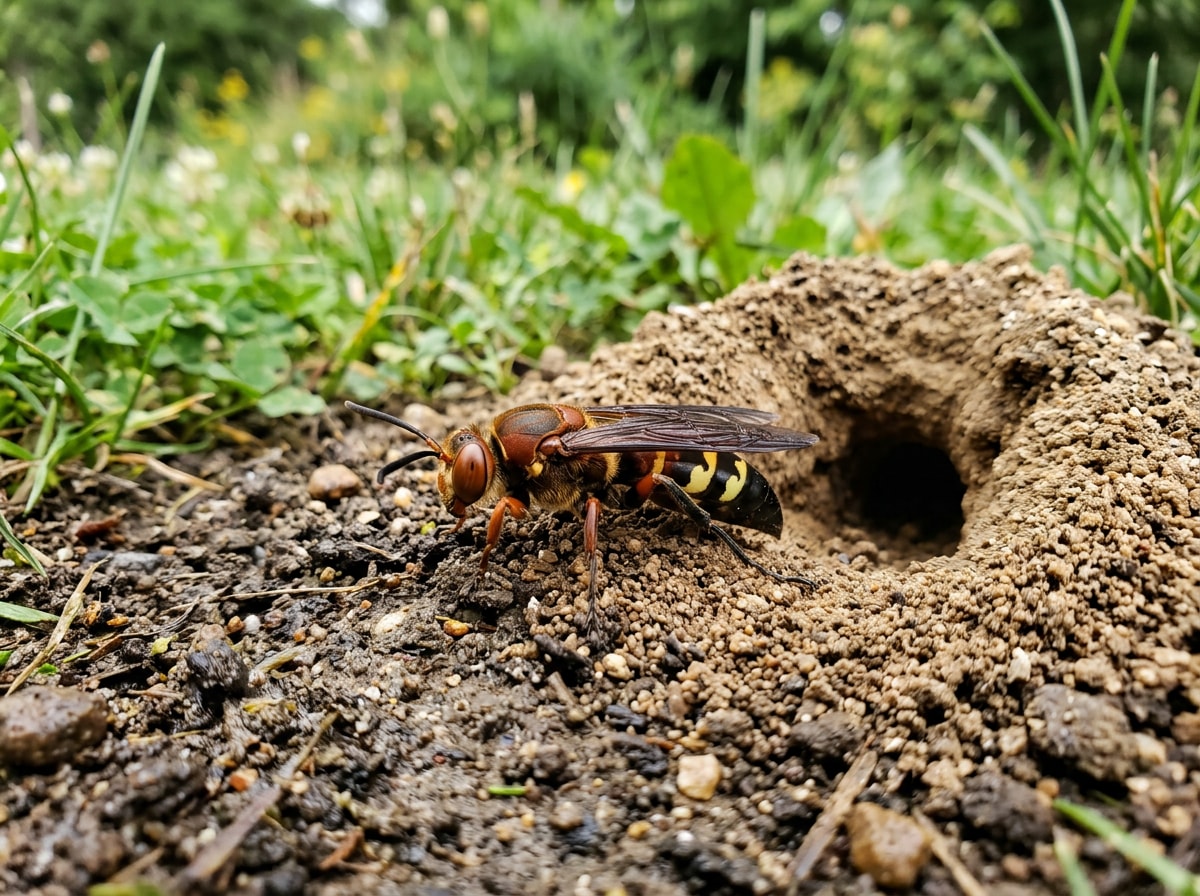
Jamaica Plain's sandy garden beds and sunny, sparsely planted lawn edges create near-ideal nesting ground, since the wasps prefer dry, well-drained, bare soil. Adults feed on nectar and tree sap, but females hunt cicadas, paralyzing them and burying them underground to feed their larvae.
Are Cicada Killers Dangerous to Humans or Pets?
Despite their size, are cicada killers dangerous to the average homeowner? Generally, no. Males patrol burrows and dive-bomb anyone who walks too close, but they have no stinger and cannot sting. Females carry a stinger but don't defend their burrows and will only sting if mishandled or grabbed.
A cicada killer sting causes sharp, localized pain for most people, though anyone with a known wasp allergy should still take it seriously and seek medical care if symptoms escalate. Pets face a similarly low risk. Dogs that paw at burrows out of curiosity sometimes get stung on the nose, but severe reactions are uncommon. If stinging insects near your home still concern you, our hornet and wasp extermination service covers inspection and treatment options.
How to Get Rid of Cicada Killers in Jamaica Plain: DIY & Professional Methods
Getting rid of cicada killers starts with matching the treatment to the size of the problem. Most Jamaica Plain yards clear up with natural, non-chemical methods. Larger infestations, or burrows near patios and play areas, may call for insecticides or professional help.
Non-Chemical & Natural DIY Methods
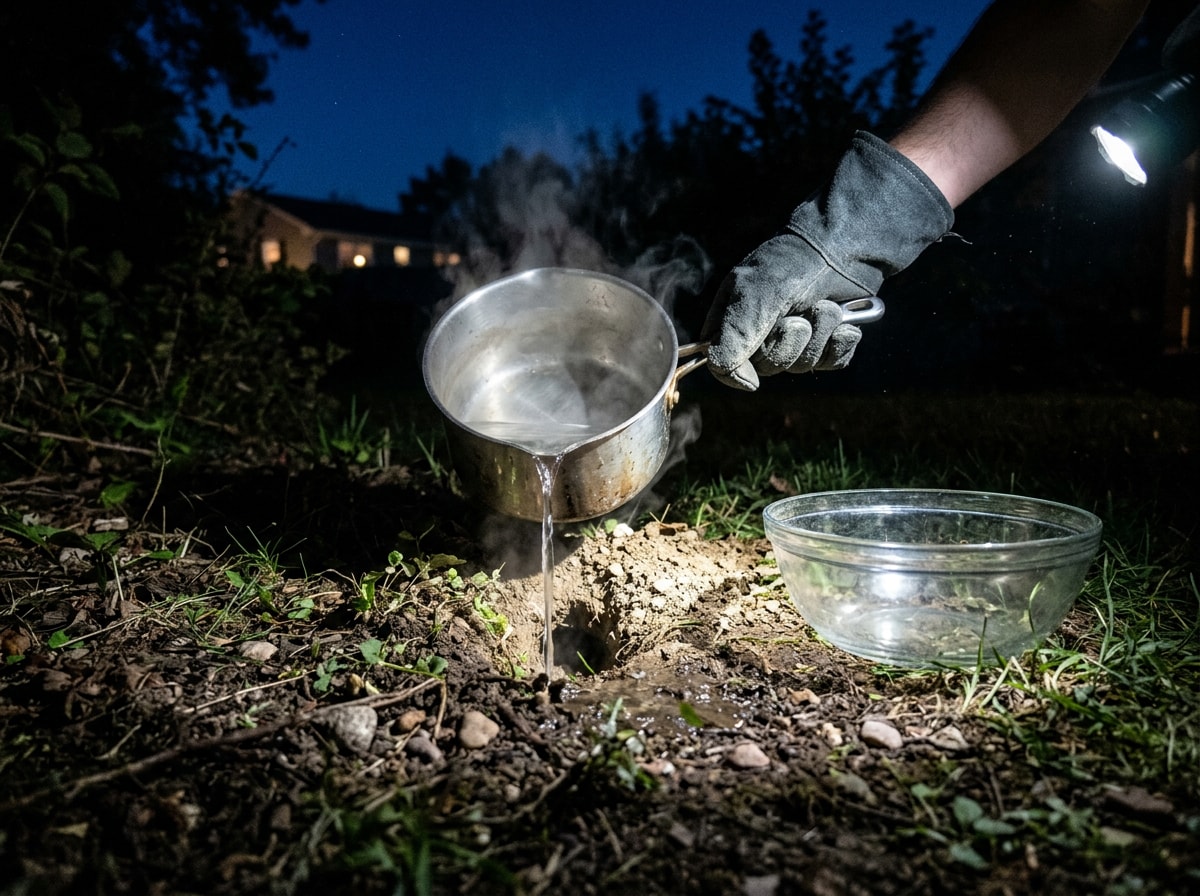
The most reliable natural removal method is the boiling-water technique:
- During daylight, mark each burrow entrance with a flag or stone (cicada killers are far less active after dark).
- Once night falls, boil a full pot of water.
- Pour the water directly into the burrow.
- Immediately cover the entrance with a glass bowl to trap any wasp still inside.
- Check the burrow the next morning and refill soil over any that are cleared.
This counts as non-toxic wasp control at its simplest, but handle boiling water carefully outdoors after dark. Spills and splashback carry a real burn risk that a lot of guides skip over.
Garden-hose flooding and food-grade diatomaceous earth are gentler alternatives, though both typically take longer to fully clear a nest.
Chemical & Insecticide Treatments
For persistent nests, insecticidal dust applied directly into the burrow at dusk, when wasps are least active, tends to work faster than natural methods alone. Ammonia floods act quickly against adult wasps already in the burrow, while boric acid works more slowly as a residual treatment that lingers in the soil. Always read the full product label before applying any pesticide, including the required protective equipment. The National Pesticide Information Center's label-reading guide is a good plain-language starting point before you buy anything.
| Method | Speed | Pet/Child Safety | Residual Effect |
|---|---|---|---|
| Insecticidal dust | Fast | Moderate risk if exposed | Short-term |
| Boiling water | Fast | Safe once cooled | None |
| Ammonia flood | Moderate | Low risk, strong odor | None |
| Boric acid | Slow | Moderate risk if ingested | Longer-lasting |
Cultural Modifications & Long-Term Prevention
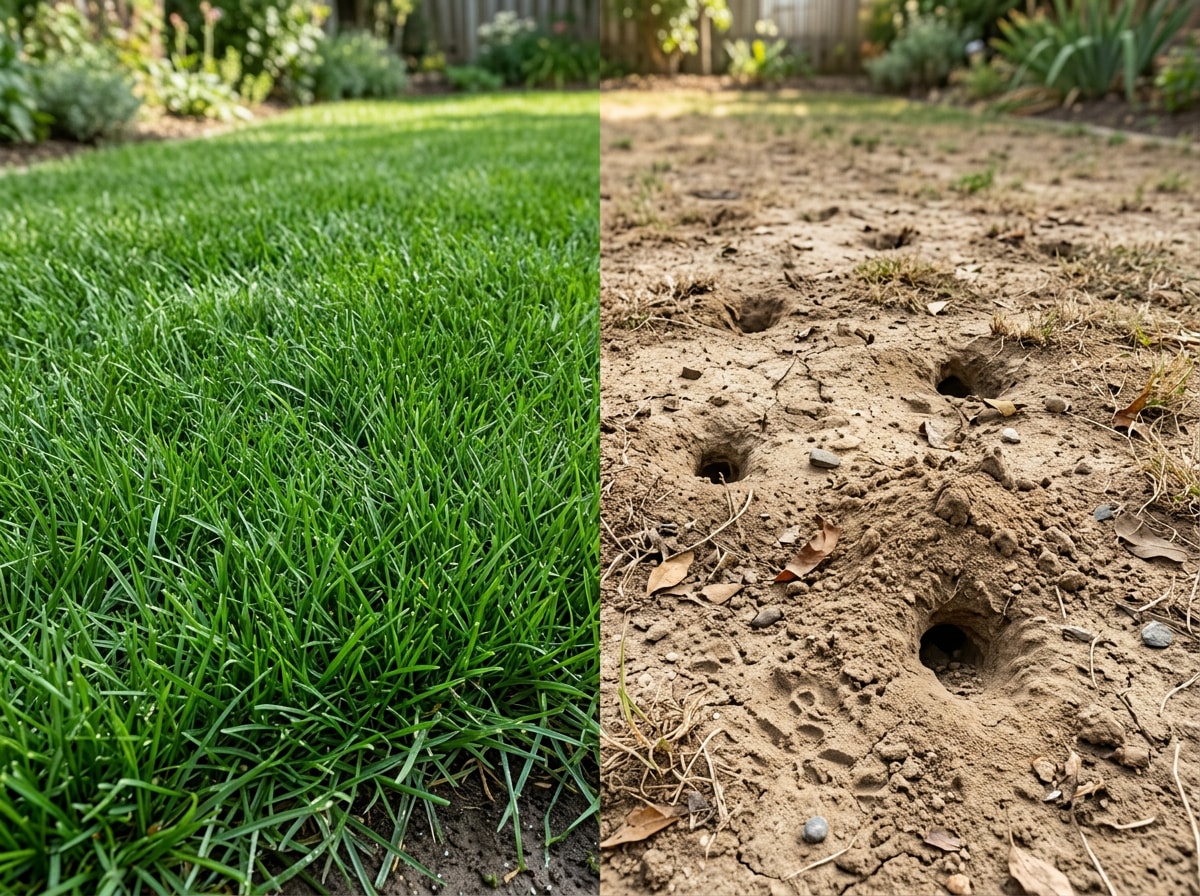
Treating existing burrows solves only half the problem. These wasps avoid moist soil, dense vegetation, and thick, well-kept lawns, so making the yard less inviting is what keeps them from coming back:
- Thicken bare and thin lawn spots by overseeding in the fall.
- Run a sprinkler over active nesting areas to temporarily discourage digging.
- Cover bare soil in garden beds with 2 to 3 inches of mulch, groundcover, or landscape fabric.
- Treat insecticide as a last resort, not the first move, since nest building is temporary behavior that often resolves on its own once the habitat changes.
This matters in Jamaica Plain, where triple-decker yards often have narrow strips of sandy, sun-baked soil along fences and driveways. Filling those bare patches removes the loose, dry ground cicada killers need to dig.
Recommended Products for Cicada Killer Control
If you decide to treat burrows yourself, a few product categories cover most situations. Insecticide dust formulated for ground-nesting wasps works well for direct burrow treatment, while an aerosol wasp spray handles wasps you can see and reach on foliage or near the nest entrance.
Granular lawn preventers are marketed for broader ground-nesting wasp control, but results are inconsistent, and most extension guidance treats any insecticide as a last resort behind cultural fixes. If you're also sorting out which product actually fits your situation, our mealybug insecticide treatment guide walks through the same label-reading and product-matching logic that applies here.
None of this replaces reading the full label, and combining several methods at once rarely speeds up results. Pick one approach and give it time before switching.
When to Call a Professional Exterminator
DIY methods handle most small infestations, but some situations call for a professional. Dozens of active burrows, nests near playgrounds or patios, or infestations that return year after year are signs the problem has outgrown home remedies.
Professional treatment usually costs more than a bottle of dust, but it includes inspection, targeted application, and follow-up, which is worth it if burrows keep reappearing. Lighthouse Exterminators serves Jamaica Plain and the surrounding neighborhoods, and if you're unsure which category your yard falls into, you can schedule a free inspection and we'll walk the property with you before recommending anything.
FAQ
Do Cicada Killers Sting?
Cicada killers are relatively non-aggressive and unlikely to sting unless forced to defend themselves. Males dive-bomb intruders but have no stinger at all. Females can sting but rarely do unless handled or stepped on directly.
What Do Cicada Killers Eat?
Cicada killers get their name from paralyzing cicadas to feed their larvae, while the adults themselves feed on flower nectar and tree sap. The cicadas are reserved entirely for the next generation developing underground.
Where Do Cicada Killers Live?
They're solitary wasps that dig angled burrows roughly six to ten inches deep, with oval egg cells branching off the main tunnel. They favor dry, sandy, sparsely vegetated soil, which explains their fondness for Jamaica Plain's sunny garden strips and lawn edges.
How Long Do Cicada Killers Live?
Adults emerge starting in June and are active through the summer, but each adult only lives a matter of weeks. The next generation overwinters as larvae in underground cocoons, then pupates in spring before emerging as adults the following summer.
What Attracts Cicada Killers to a Yard?
Bare, dry, well-drained soil is the main draw, especially in full sun. Thin lawns, sandy garden beds, and loose soil along driveways or walkways give females an easy place to dig, while nearby trees with cicadas give them a steady food source for their larvae.
Should I Kill Cicada Killers?
Cicada killers help control the cicada population naturally, and as solitary wasps they rarely threaten people the way social wasps do. Many homeowners leave isolated burrows alone. If nests cluster near doorways or play areas, treatment is reasonable. Browse our pest control services to weigh your options.
Conclusion
Clearing cicada killers from a Jamaica Plain yard follows a simple path: identify the wasp and confirm it's Sphecius speciosus, decide whether DIY treatment or a professional fits your burrow count, apply the chosen method, then shift to prevention so new burrows don't appear next summer. Most yards need nothing more than boiling water and better lawn care. For anything larger, Lighthouse Exterminators and our hornet and wasp extermination team can take it from there, starting with a free inspection.